Many facility teams struggle with the same problem: floors that dull faster than expected, stains that won't lift, or unexpected slip complaints. Skip routine care and you're looking at dulling, staining, cracking, and slip hazards that push you toward early, costly replacement.
This guide covers why SVT maintenance matters, the different types of maintenance you'll need, the warning signs that tell you something's wrong, and a practical schedule you can adapt to your facility's traffic patterns.
Key Takeaways
- SVT color runs through the entire tile, unlike LVT's printed top layer
- Daily sweeping, mopping, and entrance mats are the cheapest ways to extend floor life
- Dullness, tackiness, and increased slipperiness signal maintenance is overdue
- Maintenance frequency should scale with traffic level and facility runtime—continuous or intermittent
- Ceramic floor coatings eliminate the strip-and-wax cycle, cutting annual maintenance time by 20-40%
Why Maintenance of Solid Vinyl Tile Is Important
Consistent maintenance directly affects your lifecycle costs. A well-cared-for SVT floor stretches your capital investment across decades. A neglected one shortens it dramatically, forcing budget conversations nobody wants to have mid-fiscal-year.
What happens when maintenance gets skipped:
- Gloss fades and the surface looks perpetually dirty, even right after cleaning
- Embedded grit slowly abrades the finish, wearing down the protective topcoat
- Slip resistance drops as soil and residue build up in high-traffic lanes
SVT's solid composition does hide some of this wear better than laminated flooring products, since there's no printed layer to scratch through. That's an advantage, but it's not a free pass to skip care altogether.
Service Life and Safety Compliance
Industry lifecycle assessments from the Resilient Floor Covering Institute set a 30-year reference service life for vinyl tile, covering both SVT and LVT categories. That figure assumes a baseline of maintenance, and the same documentation is clear that actual service life varies with traffic and how consistently the floor is cared for.
Safety compliance matters just as much as appearance. OSHA's walking-working surfaces standard requires floors to stay clean, orderly, and dry to the extent feasible. Hospitals, schools, and retail environments all carry liability exposure when floors become slip hazards, making floor maintenance a genuine compliance requirement rather than a purely cosmetic one.
Preventive Costs vs. Reactive Costs
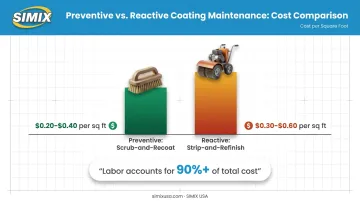
Preventive care is consistently cheaper than reactive fixes. According to ISSA's commercial cleaning rate benchmarks, the cost gap between preventive and reactive care is stark:
- Scrub-and-recoat maintenance: roughly $0.20 to $0.40 per square foot
- Full strip-and-refinish work: $0.30 to $0.60 per square foot
Labor drives that gap, accounting for more than 90% of total floor-care cost, with stripping as the most labor-intensive stage. Ceramic coating systems that eliminate stripping altogether, such as SIMIX's floor protection line, keep maintenance budgets on the cheaper, preventive side of that equation.
Translation: the longer you wait to address a floor, the more you pay someone to fix it.
Types of Maintenance for Solid Vinyl Tile
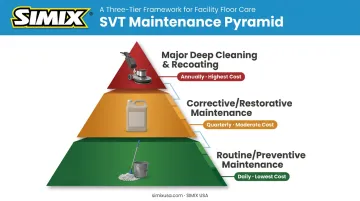
Not every SVT floor needs the same care. Traffic level, facility type, and the existing finish all shape what "maintenance" actually looks like on your floor. Broadly, it breaks into three categories.
Routine / Preventive Maintenance
This is your daily and weekly baseline, and it's the cheapest tier by far.
- Sweep or dust mop daily to remove grit before it scratches the finish
- Damp mop with a neutral-pH cleaner rather than anything acidic or highly alkaline
- Install entrance matting at all high-traffic entry points to trap soil before it reaches the floor
Costs here are mostly labor and basic supplies. It's the maintenance tier facility budgets can absorb without a second thought, and it's the single biggest lever for extending time between deep cleans.
Corrective / Restorative Maintenance
This tier kicks in when routine cleaning stops producing results. Triggers include:
- Wax buildup that leaves a hazy or yellowed appearance
- Embedded dirt in seams and grooves that won't lift with normal mopping
- Stubborn stains resistant to standard cleaning chemistry
Relying too heavily on this reactive tier gets expensive fast. You're looking at stripping chemicals, machine rental, additional labor hours, and more chemical exposure for your cleaning staff. It's not a disaster if it happens occasionally, but if corrective maintenance becomes your default mode, something upstream in your routine care is falling short.
Major / Deep Cleaning & Recoating Maintenance
High-traffic commercial SVT floors eventually need burnishing, stripping, and rewaxing cycles once routine cleaning no longer restores shine. There's no universal calendar rule here. It's driven by finish condition, not a fixed annual date.
This is where an alternative approach changes the math. SIMIX's ceramic floor coating system replaces the traditional strip-and-wax cycle with a permanent, chemically bonded ceramic layer instead of a temporary wax film sitting on top of the floor.
Facilities using this system have seen annual floor maintenance time drop by 20 to 40%, since burnishing and rewaxing are eliminated from the routine entirely.
How to Check If Solid Vinyl Tile Needs Maintenance
Catching these signs early keeps a small maintenance job from turning into a full restoration project.
Visual and surface changes often show up first:
- Finish looks dull, hazy, or yellowed instead of its original glossy appearance
- Scuff marks, scratches, or dirt visibly settled into seams and grooves
- Sticky or tacky feel underfoot, often from wax buildup or cleaning residue that wasn't fully rinsed
Rough patches, peeling finish, or lifting tile edges point to something more serious, often an installation issue rather than a simple cleaning fix.
Mopping more often just to keep floors presentable signals a maintenance need, not a scheduling problem. The same applies to stains that no longer respond to your standard cleaning routine.
Safety warning signs need immediate attention:
- Staff or visitors reporting increased slipperiness or noticeable loss of traction
- Cracks, gouges, or indentations that create trip hazards
Any of these should move maintenance up your priority list, particularly in healthcare or retail settings where liability exposure is highest.
Solid Vinyl Tile Maintenance Schedule (General Guidelines)
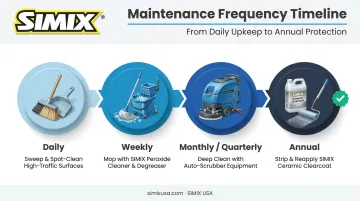
Frequency depends on foot traffic, facility type, and whether operations run continuously (think hospitals and restaurants) or intermittently (think standard offices).
| Frequency | Task |
|---|---|
| Daily | Sweep/dust mop; spot-clean spills immediately |
| Weekly | Full damp mop with neutral-pH cleaner; clean entrance mats |
| Monthly/Quarterly | Auto-scrubber cleaning; inspect for wear, gloss loss, and soil buildup |
| Annual (or as needed) | Strip and refinish, or apply/renew a protective coating |
Adjusting for your facility:
- High-traffic zones (lobbies, corridors, checkout lanes) need weekly tasks bumped to twice-weekly or daily
- Low-traffic areas can often stretch monthly inspections to quarterly
- Continuous-use facilities like hospitals should treat the "annual" column as a floor, not a ceiling. Twenty-four-hour foot traffic wears finish far faster than a standard nine-to-five office
Some facilities skip that annual strip-and-refinish cycle altogether by applying a ceramic coating like SIMIX's floor system, which is designed to eliminate stripping and cut annual maintenance time by 20–40%.
Conclusion
Structured maintenance separates SVT floors that stay presentable for a decade from those that need replacing in half that time. The right approach balances daily routine upkeep with periodic deep servicing, keeping long-term costs predictable instead of reactive.
Solutions like SIMIX's ceramic coating and cleaner system simplify that balance. By removing the labor-intensive strip-and-wax cycle from the equation, facilities spend less time servicing floors and more time using them, all while extending the floor's useful life.
Frequently Asked Questions
Should I seal vinyl tiles?
Sealing or coating is optional but recommended for high-traffic commercial floors. It reduces wear, improves gloss retention, and extends the time between deep cleans.
What is the lifespan of vinyl tile?
Solid vinyl tile can last for decades with proper maintenance, and industry lifecycle data cites a 30-year reference service life for vinyl tile products. Actual lifespan depends heavily on traffic level and how consistently the floor is cared for.
What is the difference between solid vinyl tile and luxury vinyl tile?
SVT is a solid, through-body composition where color runs through the entire tile. LVT has a printed design layer topped with a separate wear layer, which affects how each product should be cleaned and how it wears over time.
How often should commercial vinyl tile floors be stripped and waxed?
There's no fixed calendar rule. It typically ranges from a few times a year to annually, depending on traffic and finish condition. Protective coatings like SIMIX's ceramic system can extend or eliminate these intervals entirely.
What cleaning products should I avoid on vinyl tile floors?
Avoid harsh abrasive pads, steel wool, sweeping compounds, and strong solvents like acetone or turpentine. Stick to manufacturer-approved neutral-pH cleaners at the correct dilution.
Can solid vinyl tile be repaired if damaged?
Minor scuffs and dullness can usually be restored through cleaning or refinishing. Cracked or gouged tiles, on the other hand, typically require replacing the affected section rather than attempting a repair.