Many people reach for whatever cleaner is under the sink, only to find it barely touches stubborn grease, or worse, leaves streaks on a glass cooktop or dulls an aluminum finish. Not every degreaser is built the same, and using the wrong one wastes time, money, and sometimes damages the surface you're trying to protect.
This guide breaks down how degreasers actually work, how to pick the right one for your kitchen, the real differences between home and commercial-grade needs, a practical cleaning method, and what happens when real commercial kitchens standardize their approach to grease.
Key Takeaways
- Surfactants, solvents, and oxidizers break grease bonds without scrubbing
- Your best choice depends on grease severity, surface type, and cleaning frequency
- NSF-certified, peroxide-based formulas like SIMIX's clean safely without harsh fumes
- One standardized degreasing system simplifies health-code compliance for restaurants
What Is a Kitchen Degreaser and How Does It Work?
Grease doesn't behave like ordinary dirt. Oil molecules bond tightly to metal, glass, and painted surfaces, and plain water can't break that bond because oil and water simply don't mix. Wipe a greasy pan with a wet cloth and you'll just smear the mess around.
Degreasers work by breaking the surface tension between grease and whatever it's stuck to. Once that bond weakens, the grease lifts away instead of spreading. That's the entire chemistry behind every degreasing product on the market, whether it's a $4 spray bottle or an industrial concentrate.
This matters for more than appearance. According to NFPA data, U.S. fire departments responded to an average of 7,410 structure fires annually in eating and drinking establishments between 2010 and 2014, causing roughly $165 million in direct property damage each year.
Cooking equipment accounted for 61% of those fires, and NFPA identified failure to clean as a contributing factor in 22% of incidents. Grease buildup poses a genuine fire-safety risk.
Common Types of Kitchen Degreasers
Not all degreasers use the same chemistry. Here's how the main categories differ:
- Solvent-based: Petroleum or citrus-derived solvents dissolve grease fast, but many carry strong fumes and raise VOC (volatile organic compound) concerns, especially in poorly ventilated kitchens
- Alkaline/detergent-based: Rely on high pH and surfactants to convert fats into soap-like residue through saponification, though formulas above pH 10 can corrode sensitive metals
- Enzymatic: Use biological enzymes, such as lipase, to slowly break down organic grease over 10-15 minutes of dwell time; gentler on surfaces but slower to act
- Oxidative/peroxide-based: Use hydrogen peroxide chemistry to break down grease while also disinfecting, a category increasingly favored for NSF-registered formulas in food-contact environments
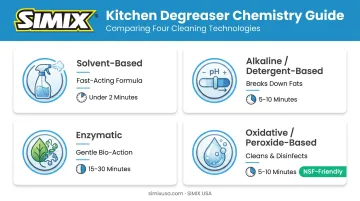
Each type trades off speed, safety, and surface compatibility differently. That trade-off is exactly what you need to weigh before buying.
How to Choose the Best Kitchen Degreaser for Your Needs
Picking the right degreaser isn't about grabbing the strongest-smelling spray on the shelf. A few factors decide whether a product actually works for your kitchen.
Surface Compatibility
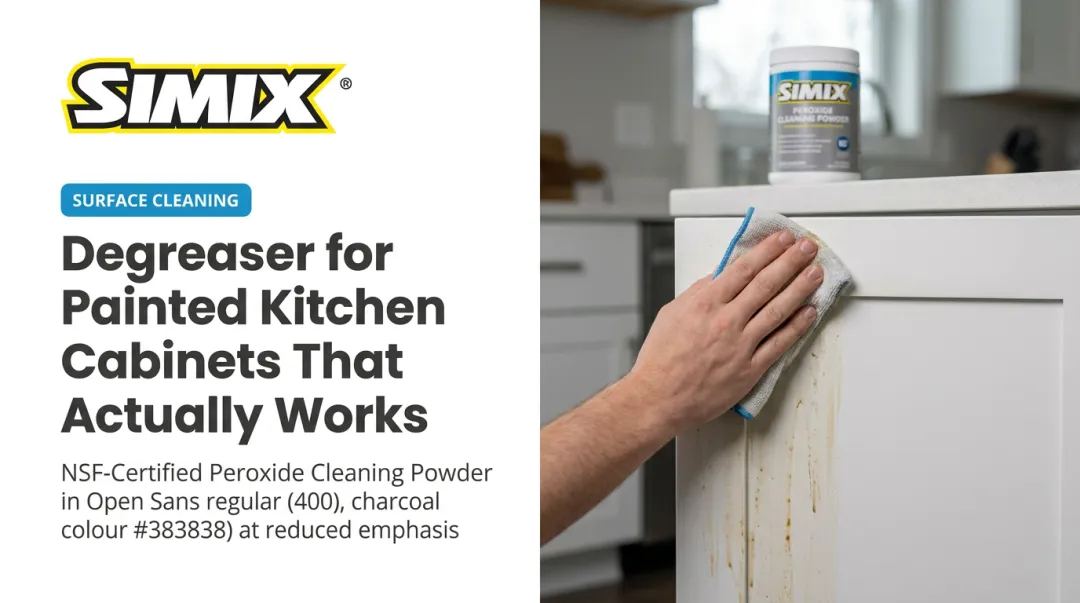
Stainless steel tolerates most degreasers well. Painted trim, aluminum, and glass cooktops don't. Strong alkaline or solvent-based formulas can pit metal or discolor painted finishes over repeated use. Always check the label, and spot-test on an inconspicuous area first.
Grease Severity
Light daily splatters respond fine to ready-to-use sprays. Baked-on grease on oven interiors, range hoods, and grates needs a concentrated formula with longer dwell time, since the chemistry needs contact time to break down hardened residue.
Safety and Toxicity
For food-contact and food-service settings, this factor matters most. NSF's Nonfood Compounds Registration Program classifies cleaners into categories, including A1 (general cleaners) and A8 (degreasers/carbon removers). Registration can involve formulation review, label review, and product testing, detailed in NSF's registration directory. Prioritize registered, zero-VOC formulas over harsh solvent sprays that demand heavy ventilation.
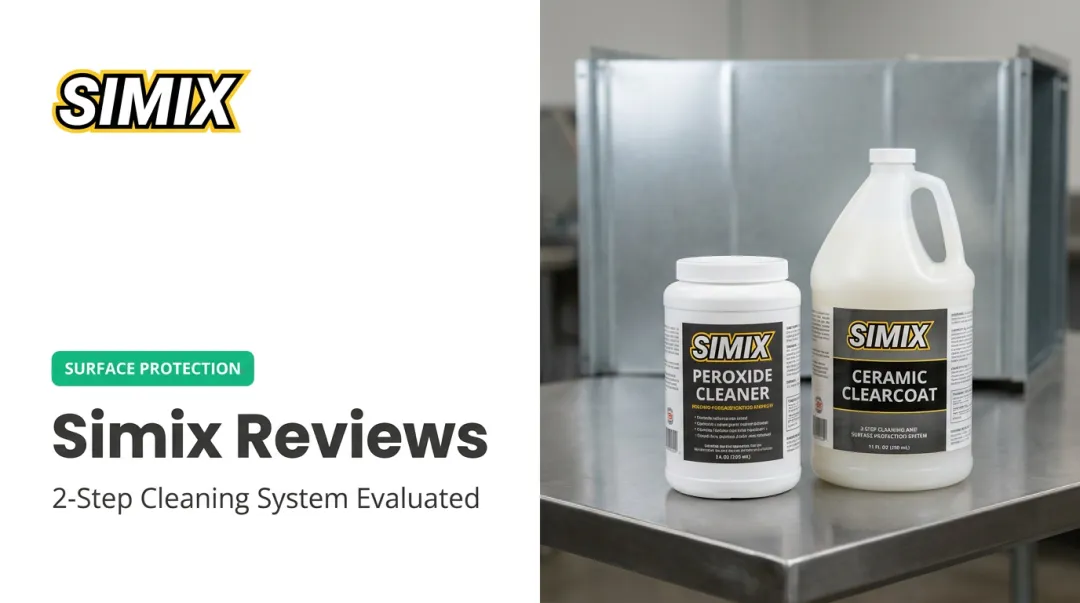
SIMIX's Multi-Surface Peroxide Cleaner & Degreaser falls into this category. It's NSF certified, peroxide-based, and formulated to cut through commercial-grade grease without the fumes or metal damage risk that solvent sprays carry. Restaurants and institutional kitchens use it specifically because metal corrosion is a real operational concern.
Application Format and Cost
Ready-to-use sprays are convenient but expensive per ounce over time, since you're paying for water and packaging. Concentrated powders or liquids cost more upfront but stretch further, an important consideration for kitchens buying in volume. SIMIX's degreaser, for example, ships as an ultra-concentrated powder rather than a diluted spray, which cuts down on both shipping weight and plastic waste.
Sustainability
Biodegradable, water-based formulas reduce both environmental impact and staff chemical exposure. This is a growing priority for restaurant and institutional buyers who want to protect employees while meeting procurement standards, without sacrificing cleaning power.
DIY Home Kitchens vs. Commercial Kitchens: Different Degreasing Needs
Home kitchens and commercial kitchens face grease problems on completely different scales.
Home kitchens typically deal with light, intermittent grease from stovetop splatters, oven spills, and occasional deep cleans. An all-purpose degreaser spray, used every week or two, handles this fine.
Commercial kitchens generate continuous, heavy grease loads on hoods, fryers, floors, and drains, day after day. That volume demands industrial-strength products applied on a set schedule, not an as-needed basis.
There's also a compliance layer home cooks never deal with. Commercial kitchens must satisfy NFPA 96, the standard covering ventilation and fire protection for commercial cooking operations, along with local health department grease-management rules. In this context, degreaser choice isn't just about cleanliness:
- Unmanaged grease buildup can trigger fire code violations
- Health inspectors check hood, fan, and duct cleanliness during routine visits
- Wastewater from hood cleaning often can't legally go down storm drains, requiring proper disposal through grease interceptors
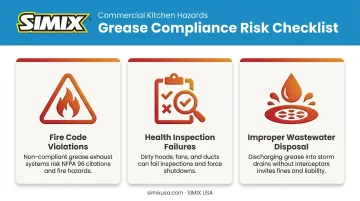
For a restaurant, the "right" degreaser is as much a regulatory decision as a cleaning one. NSF-certified formulas, like SIMIX's peroxide-based Multi-Surface Cleaner & Degreaser, are built to meet that food-contact safety standard while still working well for occasional home use.
Step-by-Step Guide to Removing Tough Kitchen Grease
Whether you're tackling a greasy stovetop or a commercial hood, the process follows the same basic sequence.
- Prep the area. Clear clutter, open windows or turn on ventilation, and put on gloves and eye protection, especially with concentrated formulas.
- Apply and let it dwell. Spray or wipe the degreaser onto the surface and let it sit for the manufacturer's recommended time. This is the step people rush, and it's the one that matters most, since the chemistry needs time to break the grease bond before it dries again.
- Agitate and wipe. Use a soft cloth or non-abrasive pad suited to the surface. For larger areas like range hoods or floors, work in sections rather than trying to cover everything at once.
- Rinse and dry thoroughly. Rinse food-contact surfaces completely to remove any residue. For food-contact surfaces, using an NSF-certified degreaser keeps the rinse step compliant with foodservice regulations, then dry the area. Leftover moisture on tile or metal floors creates a slip hazard, on top of leaving streaks.
Dwell time varies by grease severity, so don't apply a one-size-fits-all wait time:
- Light splatters lift almost immediately after application
- Baked-on commercial buildup often needs several minutes of contact before it releases
- Always check your product's label for exact timing rather than guessing
Real-World Results: How Commercial Kitchens Cut Grease and Costs with SIMIX
Numbers tell the story better than marketing claims. At The Original Pancake House in Park Ridge, Illinois, operator Dale Eisenberg has used SIMIX products across five restaurant locations for more than six years, reporting a 60-70% reduction in overall cleaning costs.
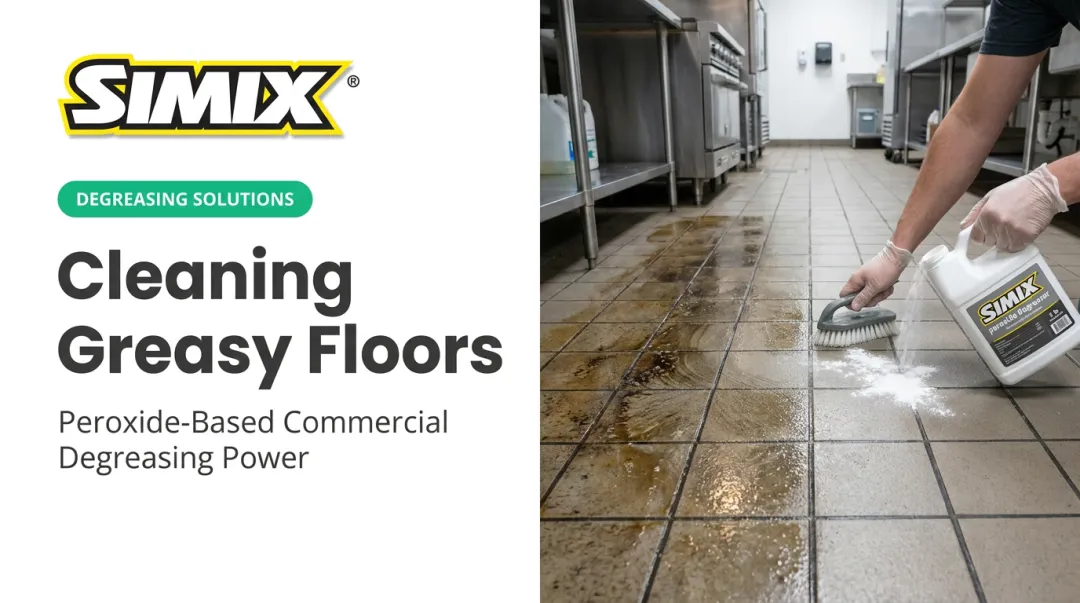
One specific outcome stands out: before switching, the location spent $2,400 per year on professional hydrojetting, performed four times annually to clear grease from pipes and drains. By regularly mopping with SIMIX's peroxide-based cleaner, which emulsifies grease as it flows down the drain, that hydrojetting cost dropped to zero.
Staff also reported kitchen floors became noticeably less slippery, directly addressing a common slip-and-fall risk in commercial kitchens.
At a Waffle House location in Phoenix, Arizona, SIMIX's surface protection system has operated in the kind of high-volume, fast-turnover environment that puts degreasers to the test daily. Fast-paced kitchens like this don't have time for products that require re-application every hour or leave residue behind.

The bigger lesson from both locations is about consistency. When a multi-location operator standardizes on one NSF-certified, systems-based degreasing product, it simplifies:
- Staff training: one set of instructions instead of five different products with different dwell times and precautions
- Procurement: one item to reorder instead of juggling multiple commodity cleaners
- Health-code compliance: consistent, documented results instead of inconsistent outcomes from switching brands
Restaurants juggling several generic cleaners often get inconsistent grease-removal results from location to location. A single proven system removes that variable entirely.
Frequently Asked Questions
What's the best kitchen grease remover?
It depends on grease severity and surface type, but NSF-certified, non-toxic, peroxide-based degreasers offer strong performance for both everyday splatters and commercial-grade buildup without harsh fumes.
Are degreasers safe to use on stainless steel and other kitchen surfaces?
Most degreasers are safe on stainless steel, but painted trim, aluminum, and glass surfaces can be damaged by stronger formulas. Always check the label or spot-test an inconspicuous area first.
Can I make a natural DIY degreaser at home?
Vinegar, baking soda, and dish soap mixtures work fine on light, everyday grease. They typically can't match the cutting power needed for baked-on residue or heavy commercial buildup.
How often should commercial kitchens degrease exhaust hoods and equipment?
High-volume kitchens typically need daily or weekly degreasing, with deeper hood cleaning scheduled per NFPA 96 fire code requirements. Solid-fuel and 24-hour operations require more frequent attention than low-volume kitchens.
Is vinegar or baking soda better for removing grease?
Baking soda, a mild alkali, is generally more effective on grease according to University of Georgia Extension. Vinegar works better on hard-water deposits and rust, though combining both can help with light, mixed messes.
What's the difference between a degreaser and an all-purpose cleaner?
All-purpose cleaners handle general dirt and light grime across many surfaces. Degreasers are formulated specifically to break the oil-and-surface bond, making them better suited for tougher, grease-specific messes.