Left unprotected, that porosity leads to cracking, staining, and surface breakdown over time. Many homeowners and facility managers pick a sealer without understanding the differences between product types, then apply it incorrectly. The result: bubbling, peeling, or a sealer that fails within a single season.
This guide breaks down the four main sealer types, how to choose the right one for your surface, the correct application process, and the mistakes that cause most sealer failures. We'll also cover what happens when standard sealers can't keep up with heavy commercial traffic.
Key Takeaways
- Concrete's porosity makes it vulnerable to water, salt, and chemical damage without a sealer.
- Four sealer types—penetrating, acrylic, epoxy, and urethane—suit different surfaces and traffic levels.
- Proper surface prep and application timing prevent most sealer failures.
- High-traffic commercial floors often need ceramic coating systems instead of sealer/wax cycles.
What Is a Concrete Sealer and Why It Matters
A concrete sealer is a protective product applied to the surface of concrete to block moisture, deicing salts, oil, and UV rays from penetrating the material. Some sealers sit on top of the concrete as a film. Others soak in and react chemically below the surface.
Concrete's pore structure is the root of the problem. Without protection, water and dissolved salts move freely through those pores, carrying damage with them.
Freeze-thaw cycles are one of the biggest threats. Water expands roughly 9% when it freezes. Once capillary pores reach a critical saturation point, that expansion creates enough hydraulic pressure to crack the surface from the inside, according to NRMCA-hosted freeze-thaw research.
Sealing reduces how much water gets in, though it works alongside proper air-void mix design, not as a replacement for it.
Core Benefits of Sealing
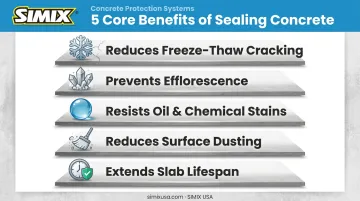
- Reduces freeze-thaw cracking by limiting water absorption into capillary pores
- Slows efflorescence, the white mineral staining caused by water migrating salts to the surface, per Euclid Chemical's technical bulletin
- Resists oil, grease, and chemical stains on driveways, garages, and industrial floors
- Cuts down on surface dusting from foot and vehicle traffic
- Extends the working life of the existing slab
Is sealing worth it? For most exterior and high-traffic concrete, yes. The exceptions matter, though.
Freshly poured concrete needs to cure, typically a minimum of 7 to 28 days depending on the sealer, before sealing. Surfaces engineered to breathe, like some below-grade walls, may need a specific vapor-permeable product rather than a standard film-forming sealer.
Commercial and industrial facilities face a compounded version of this problem. Forklift traffic, pallet jacks, and daily chemical exposure wear down standard sealers far faster than residential foot traffic ever would, which is why many facilities eventually look beyond traditional sealing altogether. More on that later.
Types of Concrete Sealers Explained
Not all sealers do the same job. The right choice depends on the surface, the traffic it sees, and the look you want.
Penetrating Sealers (Silane/Siloxane)
These sealers soak into the concrete and react chemically within the pores rather than sitting on top. They repel water and chloride salts without changing the surface appearance, which makes them the go-to choice for:
- Driveways and sidewalks
- Exterior walls and precast panels
- Parking structures exposed to deicing salts
Typical lifespan runs 5 to 10 years or more, and because there's no film to wear off, you won't see peeling or yellowing over time.
Acrylic (Film-Forming) Sealers
Acrylics form a thin topical film that enhances color and adds a wet-look gloss. That's why they're popular on stamped, colored, and exposed-aggregate decorative concrete.
The tradeoff is durability. Acrylic sealers typically last just 1 to 3 years and can become slippery when wet, so walkways and pool decks often need a slip-resistant additive mixed in.
Epoxy and Urethane Coatings
These are thick, high-build coatings designed for interior floors that take a beating: garages, warehouses, manufacturing floors, and processing areas. Epoxy offers strong chemical resistance, while urethane generally holds up better against abrasion and UV exposure.
Selection comes down to what the floor is exposed to, according to Sherwin-Williams' resin flooring guidance, which notes performance varies by chemical type, concentration, and contact time.
This is also where standard sealers start to fall short. Heavy forklift traffic and constant chemical exposure push epoxy and urethane coatings toward frequent recoating cycles, a pain point we'll address in the final section.
Quick-reference comparison:
| Sealer Type | Lifespan | Appearance Change | Best For |
|---|---|---|---|
| Penetrating (silane/siloxane) | 5–10+ years | None | Driveways, sidewalks, exterior walls |
| Acrylic (film-forming) | 1–3 years | Gloss, color enhancement | Decorative, stamped concrete |
| Epoxy | Wears with traffic; needs recoating | High-gloss film | Warehouses, garages, industrial floors |
| Urethane | Wears with traffic; needs recoating | Matte to gloss film | High-traffic interior floors, UV-exposed areas |
How to Choose the Right Sealer for Your Project
Start with the surface itself. A driveway has different needs than a stamped patio or an interior warehouse floor.
Key decision factors:
- Surface type: driveway, patio, garage floor, or industrial slab
- Traffic level: foot traffic only, or vehicle and equipment traffic
- Exposure: indoor versus outdoor, and whether the area sees freeze-thaw cycles or deicing salt
- Desired look: natural matte finish versus glossy, color-enhanced appearance
Once you've narrowed down these factors, check the manufacturer's technical data sheet before buying anything. Look specifically for:
- VOC limits: these vary widely by product and region, so don't assume a "low VOC" label meets your local rule
- Surface porosity requirements: some penetrating sealers need a minimum absorption rate to bond properly
- Climate suitability: temperature and humidity windows differ significantly between product families
The data sheet tells you what a product should do on paper. Testing tells you what it actually does on your surface.
Before committing to a full application, apply the sealer to a small, inconspicuous section first. This confirms adhesion and reveals any unwanted color shift before you commit further. Skipping this step is how a lot of DIY projects end up with a blotchy or hazy result across an entire driveway.
How to Apply Concrete Sealer Correctly (Step-by-Step)
Application errors cause more sealer failures than product quality ever does. Follow these steps in order.
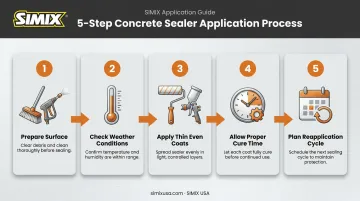
- Prepare the surface thoroughly. Clean with a degreaser or pressure washer, strip any old sealer or stains, and let the surface dry fully for 24 to 48 hours before applying anything.
- Check weather conditions. Most sealers have a specific temperature window (often 40°F and rising for penetrating products, tighter ranges for epoxies). Avoid applying in high humidity, direct sun, or windy conditions.
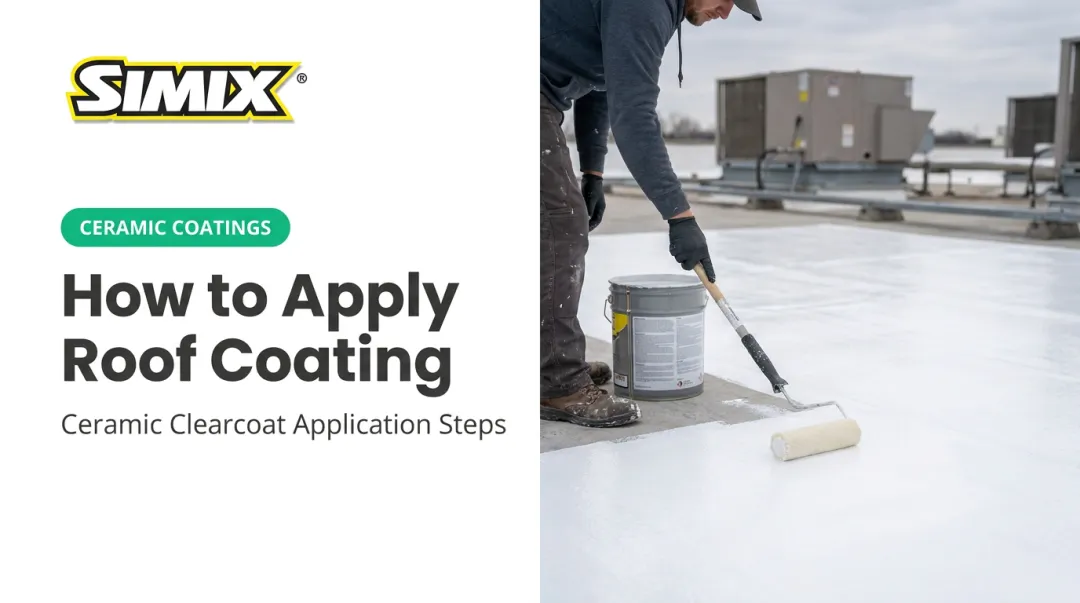
- Apply in thin, even coats. Use a sprayer or roller, working in manageable sections so you're not fighting pooling or streaking as you go.
Watch for these two mistakes above all else:
- Over-application traps moisture underneath, causing bubbling or a hazy white film.
- Under-application leaves gaps in protection that fail early.
Thin, even coats beat one heavy pass every time.
- Allow proper cure time. Most sealers handle light foot traffic within 24 hours, but full cure can take up to 72 hours or longer depending on the product and conditions.
- Plan your reapplication cycle now. Mark your calendar based on the sealer type and expected traffic. Waiting until you see visible wear means you're already behind.
Common Concrete Sealer Mistakes and Maintenance Tips
Most sealer complaints trace back to one of a few avoidable errors.
The biggest culprits:
- Sealing dirty, wet, or improperly prepped concrete ranks as the top cause of fogging, poor adhesion, and early failure
- Over-applying sealer traps moisture underneath, which often causes bubbling or peeling that requires full stripping and reapplication
- Skipping routine cleaning and inspection lets small problems go unnoticed until they become expensive repairs
- Ignoring reapplication timelines matters because sealer protection doesn't last forever, even when it still looks fine on the surface
For ongoing maintenance, keep it simple:
- Clean with mild soap and water on a regular schedule; avoid harsh solvents that can degrade the sealer film
- Do a visual wear check each season, looking for dulling, water absorption, or dark spots that suggest the sealer is breaking down
- Reapply roughly every 2 to 3 years for exterior sealers and every 3 to 5 years for interior sealers, adjusting based on actual traffic and weather exposure rather than a fixed calendar
When Traditional Sealers Aren't Enough: Ceramic Coating for Commercial Floors
Traditional sealers hit a wall in commercial and industrial settings. Warehouse floors under constant forklift traffic, retail spaces with heavy foot flow, and institutional buildings running 24/7 all wear through standard epoxy and urethane coatings faster than facility budgets can absorb.
The typical cycle looks like this: strip, recoat, burnish, repeat. Each cycle means downtime, labor, and chemical costs that add up year after year.
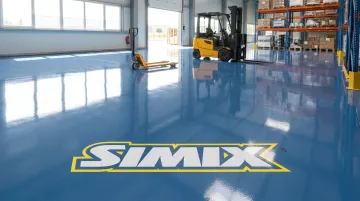
SIMIX's Concrete Rejuvenation System takes a different approach. It combines diamond polishing with SIMIX's ceramic coating chemistry to restore existing warehouse and industrial slabs, addressing surface degradation from forklifts, pallet jacks, and embedded soils at a fraction of full replacement cost.
What makes it different from a standard sealer:
- The ceramic clearcoat bonds chemically to the concrete surface rather than sitting on top like a wax or film
- It's rated harder than epoxy and doesn't yellow, chip, or peel over time
- SIMIX documents a 5 to 10 year floor coating lifespan with no stripping ever required
- Facilities using this system report a 20 to 40% reduction in annual floor maintenance time compared to conventional sealer and wax cycles
Maintenance simply means routine cleaning with SIMIX's Multi-Surface Cleaner, which refreshes the coating's surface chemistry instead of requiring a full strip-and-recoat cycle.
For facility managers overseeing warehouses, retail floors, or institutional buildings, this system offers a longer-term ROI case than repeatedly resealing a floor that keeps wearing out under the same traffic conditions.
Frequently Asked Questions
Is it good to put sealer on concrete?
Yes, for most exterior and high-traffic surfaces, sealing protects against water, salt, and stain damage. The main exception is freshly poured concrete, which needs to cure fully (often 7 to 28 days) before sealing.
What is the best thing to seal concrete with?
It depends on the surface. Penetrating sealers work best for driveways and exteriors, acrylics suit decorative and stamped concrete, and epoxy or urethane coatings handle high-traffic interior floors. Ceramic clearcoats, such as SIMIX's water-based formula, offer a newer option for UV-resistant, breathable protection on exterior and decorative concrete.
How long does concrete sealer typically last?
Penetrating sealers last 5 to 10+ years, acrylics last 1 to 3 years, and epoxy or urethane coatings vary based on traffic and require periodic recoating. Weather and foot traffic both affect actual longevity.
Can I apply concrete sealer myself?
Most residential penetrating and acrylic sealers are DIY-friendly with proper surface prep and the right weather conditions. Commercial floors under heavy traffic typically benefit more from professional-grade coating systems.
Does sealing concrete make surfaces slippery?
Glossy film-forming sealers, especially acrylics, can become slippery when wet. Matte finishes or sealers with a slip-resistant additive work better for walkways, pool decks, and ramps.
How often should concrete be resealed?
Exterior sealers generally need reapplication every 2 to 3 years, while interior sealers last 3 to 5 years. Actual timing depends on the sealer type (including epoxy or urethane coatings), traffic volume, and visible wear during periodic inspections.