That's because grease doesn't behave like dirt or mud. Fats and oils are nonpolar, while water is polar, so plain water rinses slide right past grease without lifting it. This is basic chemistry behind how cleaning products work, not a fluke of your mop.
Results vary widely depending on cleaner chemistry, technique, and the floor material underneath. This guide breaks down the exact steps, the variables that determine success, the mistakes that sabotage otherwise-good efforts, and how to troubleshoot floors that stay greasy no matter how much you scrub.
Key Takeaways
- Grease resists water, so use alkaline or oxidizing cleaners, not soap
- Sweep debris first, then dilute correctly to stop grease from spreading
- Dwell time and solution strength decide if grease lifts or smears
- Recurring residue means dirty mop water or rinsing too fast
How to Clean Greasy Floors: Step-by-Step Guide
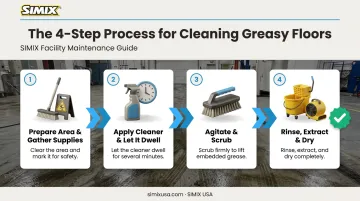
Step 1: Prepare the Area and Gather Supplies
Skipping prep is the fastest way to turn a 20-minute cleanup into an hour-long mess. Start here:
- Clear debris and warn people: place wet floor signage before you begin, since OSHA's walking-working surfaces standard requires floors to stay clean and hazard-free
- Sweep or dry-mop loose dirt first, so grit doesn't grind into the grease film once water hits it
- Choose a degreaser matched to the floor and grease level: NSF-certified, peroxide-based formulas like SIMIX's Multi-Surface Peroxide Cleaner & Degreaser break down embedded grease without attacking the substrate underneath
Don't guess on dilution. Follow the label. Under-diluting wastes product; over-diluting leaves grease behind.
Step 2: Apply the Cleaner and Let It Dwell
Apply the solution in manageable sections rather than flooding the whole floor at once. Working section by section keeps the cleaner from drying out before it does its job.
Then wait. Grease needs contact time to loosen and emulsify before it can be rinsed or scrubbed away. Rinsing too soon leaves a filmy residue that still feels greasy, even though you just cleaned.
For older, hardened buildup, give the cleaner more time or a stronger concentration than you'd use on light daily residue. A grill line that's been mopped nightly for a week needs a lighter touch than one that's gone months without a real degreasing.
Step 3: Agitate and Scrub
Chemistry alone rarely finishes the job on textured or heavily soiled floors. Physical agitation breaks the bond between grease and the surface.
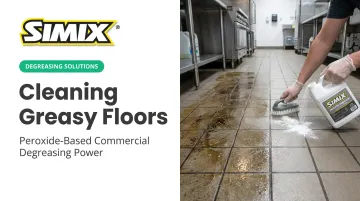
- Use a scrub brush, deck brush, or floor machine, focusing on grout lines and textured tile where grease traps and hides
- Avoid abrasive pads or metal scrapers on delicate flooring, such as sealed hardwood or polished tile, to prevent scratching or dulling
- Spot-treat stubborn patches with a more concentrated solution before your final scrub pass
Grout deserves extra attention here. It's porous, with plenty of internal surface area to soak up oily residue, so a single quick pass rarely reaches what's absorbed below the surface.
Step 4: Rinse, Extract, and Dry
This is where a lot of otherwise-good cleaning jobs fall apart.
- Rinse with clean water, changing your mop water frequently or switching to a two-bucket system so you're not redepositing dissolved grease with every pass
- Extract, don't just push around: on larger commercial or industrial floors, a wet vacuum or auto-scrubber pulls the grease-laden solution off the floor instead of smearing it into a thin film
- Let the floor dry completely before reopening it to foot traffic, since a floor that looks clean but is still wet is still a slip hazard
Some degreasers, including SIMIX's peroxide-based formula, are designed to require no rinse at most dilutions. That said, always confirm against the specific product label for your dilution and floor type.
Key Factors That Affect Grease Removal Results
Success here comes down to controllable variables, not just how hard you scrub.
Water Temperature
Warmer water dissolves fats and oils faster than cold water does. But hotter isn't automatically better: excessive heat can damage certain finishes, particularly sealed wood, where wet or steam mopping is discouraged altogether. Match water temperature to what your specific flooring can handle, not a one-size-fits-all number.
Cleaner Dwell Time
Grease needs contact time with the cleaning solution before it can be lifted or rinsed. Surfactants have to wet the surface, surround the greasy soil, and suspend it before removal actually happens. Rinse too soon, and you're left with a filmy residue that never really came off.
Cleaner Chemistry (pH and Surfactants)
Alkaline and oxidizing degreasers break grease bonds chemically. Mild dish soap only lifts surface-level oil through surfactant action. Mismatched chemistry for the floor material can discolor or degrade the surface over time — acidic cleaners on cement grout, for example, or wet mopping on unsealed wood.
Grease Age and Buildup Thickness
Old, hardened grease behaves differently than yesterday's spill. Heat and oxygen exposure over time can turn cooking oils into resin-like, polymerized deposits that bond stubbornly to hard surfaces.
Grout and concrete compound the problem, since their porous structure absorbs oil into the material itself. Light daily grease needs a different protocol than months or years of buildup, which explains why quick fixes so often fail on older messes.
Common Mistakes When Cleaning Greasy Floors
Most greasy-floor complaints trace back to a handful of repeat offenders:
- Reusing the same mop and water everywhere — dragging kitchen grease into other rooms instead of removing it
- Rinsing before the cleaner has dwelled, leaving a sticky film that feels clean but isn't
- Guessing at dilution ratios, which leaves floors streaky, hazy, or slippery instead of actually clean
- Using metal scrapers or abrasive pads on finished floors, scratching or dulling surfaces that didn't need that kind of force
That first habit, reusing the same dirty mop water, has a simple fix. Health-focused cleaning guidance consistently recommends a two- or three-bucket system to separate clean solution from dirty recovery water. It's a small habit change with an outsized payoff on grease removal.
Troubleshooting: Why Floors Stay Greasy or Slippery After Cleaning
Plenty of people follow every "right" step and still end up with a floor that feels off. Here's why.
Floor Still Feels Greasy After Mopping
Likely cause: Diluted or weak cleaner, a mop redepositing dirty solution, or rinsing before the grease was fully lifted.
What to adjust: Switch to a two-bucket mopping method, change rinse water more often, and match cleaner strength to how heavy the grease actually is, not how heavy you assume it is.
Grease Buildup Won't Come Off Despite Scrubbing
Likely cause: Years of hardened, polymerized grease bonded into porous grout, concrete, or textured flooring.
What to adjust: Move to a stronger oxidizing degreaser with extended dwell time and mechanical agitation, or plan a dedicated deep-clean cycle rather than expecting routine mopping to handle it.
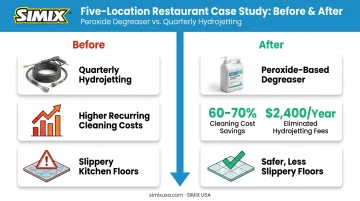
One Original Pancake House operator in Park Ridge, Illinois, dealt with exactly this across five locations. After switching to SIMIX's Multi-Surface Peroxide Cleaner & Degreaser, he reported 60-70% savings on overall cleaning costs and eliminated $2,400 a year in hydrojetting fees that used to run four times annually.
Floor Is Slippery Even After It Looks Clean
Likely cause: Leftover soap or degreaser residue, or grease that got pushed into the pores instead of being removed.
What to adjust: Add a final clean-water rinse pass, confirm your cleaner actually rinses residue-free, and let the floor dry fully before reopening it.
That same pancake house operator specifically noted his kitchen floors became noticeably less slippery after making the switch, a direct safety win in a high-traffic, grease-heavy environment.
Conclusion
Cleaning greasy floors successfully comes down to matching cleaner chemistry, dwell time, and technique to both the grease level and the floor material. Most recurring "still greasy" complaints trace back to skipped prep, rushed dwell time, or dirty rinse water, not a lack of effort.
Facilities dealing with recurring heavy grease, such as commercial kitchens and warehouses, benefit most from pairing a proven degreasing routine with a professional-grade, NSF-certified cleaner like SIMIX's Peroxide Cleaner & Degreaser. This pairing cuts down on how often a full deep clean is needed.
Frequently Asked Questions
How do you remove years of grease buildup?
Old, hardened grease needs a stronger oxidizing or peroxide-based degreaser, such as SIMIX's NSF-certified formula, longer dwell time, and mechanical agitation with a scrub brush or floor machine. Heavy buildup often requires multiple treatment cycles rather than one pass.
Why are my floors still greasy after mopping?
The usual culprits are diluted cleaner, dirty mop water redepositing grease, or rinsing before the cleaner had time to work. Switch to a two-bucket method and match cleaner strength to actual grease severity.
What is the best homemade cleaner for greasy floors?
Dish soap and warm water handle light grease fine. Baking soda paste or diluted vinegar can help with moderate buildup, but neither holds up well against heavy commercial-level grease.
Can I use vinegar to clean greasy floors?
Vinegar cuts light grease and disinfects, but it's far less effective against heavy, aged grease. Avoid it on natural stone or unsealed wood, since the acidity can etch or damage the finish.
How often should commercial kitchen floors be degreased?
Daily light cleaning plus a scheduled deep degreasing based on your cooking volume and traffic levels works best. Facility-specific schedules prevent buildup from hardening in the first place.
Is hot or cold water better for removing grease?
Hot water dissolves fats and oils more effectively than cold water. Still, check your flooring material's heat tolerance first, since some finishes and unsealed wood don't hold up well under hot, wet mopping.