Slippery concrete is one of the most common causes of slip-and-fall injuries on both commercial and residential properties. The good news: it's almost always a surface-condition problem, not a structural one. That means it's fixable, often without tearing anything out.
This guide covers why concrete turns slick in the first place, the step-by-step process for fixing it, when to DIY versus call a pro, and how to keep your slab safe long after the initial fix.
Key Takeaways
- Moisture, smooth trowel finishes, glossy sealers, and contamination cause most slippery concrete
- Fixes range from mechanical texturing and anti-slip additives to degreasing and slip-rated coatings
- Contamination fixes are DIY-friendly; heavily worn slabs need professional resurfacing
- Slip resistance isn't permanent; ongoing cleaning keeps concrete safe long-term
Why Does Concrete Get Slippery?
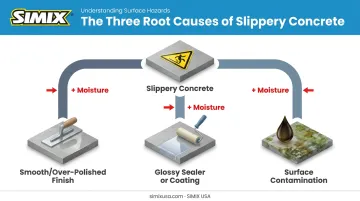
Three things cause most slippery concrete: a smooth finish, a glossy topcoat, or contamination sitting on top of either one. Understanding which one you're dealing with determines everything else.
Smooth Finishes Reduce Traction
A hand-troweled or heavily polished surface has fewer microscopic peaks and valleys for a shoe sole to grip. Less texture means less friction, and once water gets between the sole and the slab, that flat contact turns into a skating rink.
Glossy Sealers Make It Worse
Acrylic sealers and topical coatings add shine, but shine and traction don't come from the same place. An overapplied glossy sealer creates a thin film that sits on top of the concrete texture rather than working with it. When that film gets wet, it behaves more like a sheet of glass than a floor.
Contamination Is the Biggest Culprit
Even a properly textured, correctly sealed slab can turn dangerous once something coats the surface:
- Oil and grease in garages, loading docks, and commercial kitchens
- Algae and mildew on shaded or humid outdoor slabs
- Dust, pollen, and soap film that build up gradually and go unnoticed
OSHA's walking-working surfaces standard requires floors to stay clean and, where feasible, dry. Water and grease are consistently flagged as leading contributors to same-level falls in workplace settings (OSHA 1910.22).
Misconception worth clearing up: texture doesn't automatically equal safety. Polished concrete has a reputation for being slick, but that's often undeserved.
In one industry study, contractors tested 48 polished concrete sections across different aggregate exposures and gloss levels. All 576 wet-condition tests exceeded the 0.42 DCOF benchmark used for wet-area flooring (ASCC/CPC polished concrete study). The polish wasn't the problem in those cases; a poorly chosen glossy topcoat over that same polish could easily perform worse.
How to Make Concrete Less Slippery (Step-by-Step)
The right fix depends entirely on diagnosing the cause first. Texturing, cleaning, and coating solve different problems, and using the wrong one wastes both time and money.
Step 1: Identify What's Making the Surface Slippery
Before touching a grinder or a bottle of cleaner, check the following:
- Is there visible contamination, such as oily residue, a green or black film, or a glassy sheen from over-sealing?
- What's the finish type (hand-troweled, stamped, polished)? This affects which fix will actually work.
- Has this happened before, or is this the first time the surface has felt slippery?
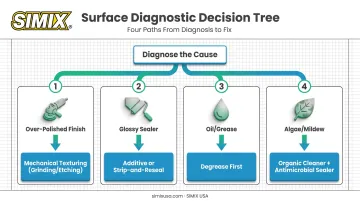
These answers point to one of four likely culprits: an over-polished surface, a failed glossy sealer, contamination, or organic growth. Each cause calls for a different fix, covered step by step below.
Step 2: Apply the Fix Based on the Cause
If the slab has a smooth or over-polished finish, mechanical texturing is the answer. Options include diamond grinding, honing back to a lower grit, or light acid etching to reintroduce microtexture.
Be careful with over-texturing, though: too aggressive a profile traps dirt and becomes hard to clean. Match the texture level to actual foot traffic, not the roughest option available.
If a glossy sealer or coating is the cause, you have two paths. The lighter fix is mixing a slip-resistant additive, such as polymer grit or aluminum oxide, into the next coat of sealer, or broadcasting it onto the wet topcoat.
The more thorough fix is stripping the old sealer entirely and reapplying a lower-gloss, slip-rated product. If the current sealer has failed more than once, skip the light fix and go straight to full removal.
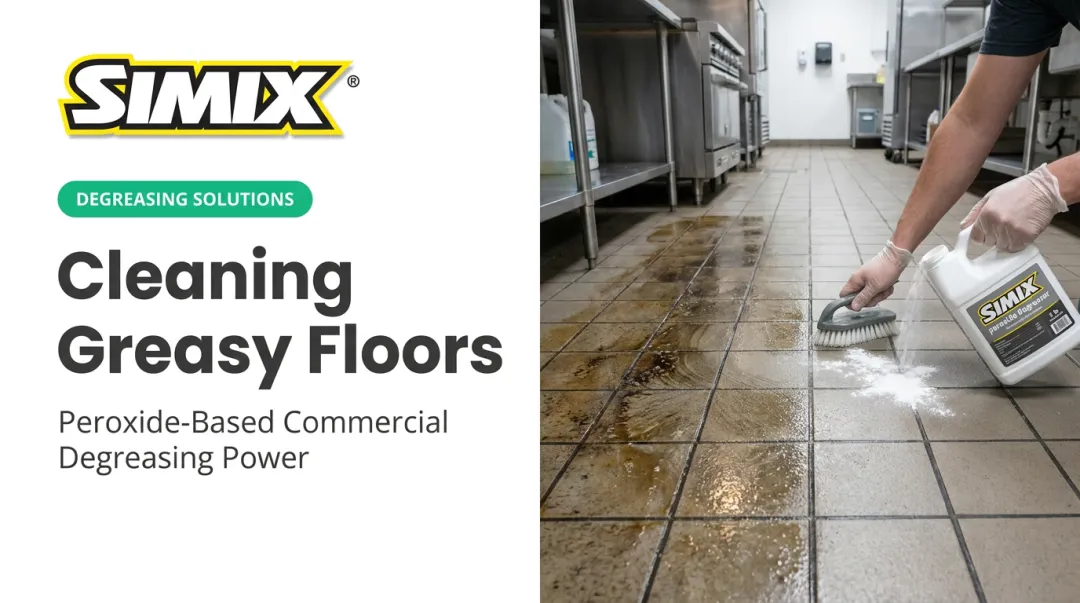
If oil, grease, or grime is the root cause, degreasing has to happen before any texturing or coating work. Contamination sitting under a new coat prevents proper adhesion, and the slip risk just continues underneath the fresh finish.
SIMIX's NSF-certified Multi-Surface Peroxide Cleaner & Degreaser is built for exactly this: a non-toxic, water-based formula that strips grease and biological film from concrete in commercial kitchens, warehouses, and garages, without leaving harsh chemical residue behind.
If algae, mildew, or organic growth is the issue on an outdoor slab, a cleaning treatment formulated for organic buildup is step one. For shaded or consistently humid areas, look for a sealer with anti-microbial properties or a slip rating designed for wet-area use, since the growth will likely return without ongoing protection.
Step 3: Test the Fixed Surface
Don't declare victory yet. Test traction while the surface is wet, using bare feet or the footwear typically worn in that space, before putting the area back into full use. Re-check slip resistance again after the first few cleaning cycles — that's when you'll know whether the fix is holding up or starting to wear thin.
DIY Fixes vs. Professional Resurfacing
Not every slippery slab needs a contractor. Simple contamination or minor gloss issues are solid DIY candidates using anti-slip additives, degreasers, or a fresh coat of slip-rated sealer.
Professional resurfacing makes more sense when:
- The slab is heavily worn or has multiple failed coating layers
- You're covering a large commercial area where consistency matters
- Previous DIY attempts have failed repeatedly on the same spot
The table below breaks down how these factors typically play out:
| Factor | DIY-Friendly | Better for a Pro |
|---|---|---|
| Cause | Surface contamination, minor gloss | Structural wear, repeated coating failures |
| Area size | Small to mid-size | Large commercial or warehouse floors |
| Slab history | First fix attempt | Multiple failed prior treatments |
| Budget benchmark | Lower upfront cost | $3–$10 per sq ft for driveway-scale resurfacing (Concrete Network, 2026) |
For the heavily worn warehouse or commercial floors described above, full slab replacement isn't always necessary. SIMIX's Concrete Rejuvenation System combines diamond polishing with ceramic chemistry to restore worn concrete at a fraction of replacement cost — a middle path between a cosmetic DIY patch and tearing out the entire floor.
Common Mistakes to Avoid
Avoid these common missteps that undercut your efforts:
- Overdoing the grit. Piling on anti-slip additive makes floors uncomfortable underfoot and much harder to clean — more grit isn't automatically safer.
- Coating over contamination. Applying a new sealer or coating without degreasing first just traps the problem under a fresh, good-looking surface.
- Treating one cleaning as permanent. Acid etching or a single deep clean offers only temporary improvement; slip resistance needs ongoing upkeep.
Preventive Maintenance to Keep Concrete Slip-Resistant
A fix only lasts if you maintain it. Build a routine around these habits:
- Clean on a schedule. Use a neutral-pH or degreasing cleaner regularly to stop oil, algae, and grime from rebuilding between major treatments.
- Inspect sealers and coatings periodically. Gloss buildup and wear happen faster in high-traffic or sun-exposed areas, so reapplication timing varies by location.
- Prioritize combined solutions for high-traffic floors. Food-service and warehouse floors benefit from products like SIMIX's Cleaner + Clearcoat Combo, which clean and protect in one pass, cutting down how often re-treatment is needed.
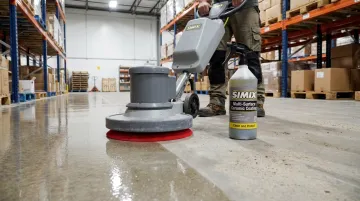
For facilities managing large floor areas, that combination of safe cleaning and durable protection tends to matter more than any single deep-clean event.
Frequently Asked Questions
What causes concrete to be slippery?
Smooth or over-polished finishes, glossy sealers and coatings, and contamination like oil, grease, or algae are the main causes. Moisture on any of these turns a manageable surface into a hazard.
Is polished concrete always slippery?
Not necessarily. Properly polished concrete can meet or exceed standard wet-traction benchmarks; the slip risk usually comes from an added coating, not the polish itself.
How can I make concrete less slippery when wet without changing its look?
Clear anti-slip additives, like fine polymer grit or aluminum oxide, mix into a sealer coat to add traction without altering color or appearance. Products such as SIMIX's ceramic clearcoat are formulated to accept these additives while preserving a natural concrete look.
Do anti-slip additives wear out over time?
Yes. Additives embedded in topical sealers wear down from foot traffic and UV exposure, and typically need reapplication every couple of years depending on use.
Is stamped concrete near pools always going to be slippery?
Usually it's the sealer, not the stamped texture, causing the problem. Switching to a low-gloss or slip-rated sealer resolves the issue in most cases.
Can I fix slippery concrete myself, or do I need a professional?
Surface contamination and minor gloss issues are DIY-friendly with the right cleaner or additive. Heavily worn or repeatedly failing surfaces are better handled through professional resurfacing.