There's no single price tag for this project. Costs swing based on coating type (epoxy, polyurea, polyaspartic, or ceramic), your driveway's size and condition, and where you live.
This guide breaks down real pricing ranges, the factors that push costs up or down, and how to budget so you don't get blindsided by hidden fees.
Key Takeaways
- Professional driveway coatings typically run $5–$12 per sq ft
- DIY epoxy kits start near $3 per sq ft, the lowest-cost option
- Coating type drives cost more than anything else, followed by surface prep and repairs
- Small, undamaged driveways cost far less than large or cracked ones
- Premium polyaspartic and ceramic systems cost more upfront but lower long-term maintenance spend
How Much Does Concrete Driveway Coating Cost? (Pricing Overview)
Driveway coating pricing has no fixed number. It depends on coating type, square footage, and how much repair work your existing concrete needs before anything gets applied.
Homeowners often underbudget in three specific ways:
- Confusing sealing with coating: sealers are thin protective films; coatings are thicker, load-bearing systems
- Skipping prep costs: cracks, oil stains, and moisture issues add to the invoice fast
- Ignoring recoating cycles: cheaper coatings need more frequent touch-ups, raising lifetime cost
Typical Cost Range
Here's what you'll actually pay in 2026, based on verified industry benchmarks:
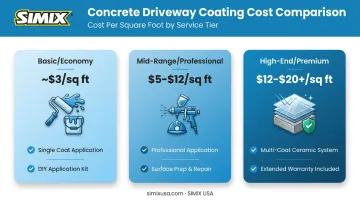
| Tier | Price per Sq Ft | What It Covers |
|---|---|---|
| Basic/economy (DIY) | About $3 | Consumer-grade epoxy kit, single coat |
| Mid-range/professional | $5–$12 | Epoxy or polyurea, professional labor, moderate prep |
| High-end/premium | $12–$20+ | Polyaspartic or ceramic systems, multi-coat, extensive prep |
These ranges typically include materials, labor, and one primary coat. They usually exclude crack repair, pressure washing, and any sealer topcoat applied later.
What Each Tier Actually Gets You
Basic/economy coating: Single-coat DIY kits with minimal surface prep. Best suited for small driveways, tight budgets, or homeowners after a quick cosmetic refresh rather than long-term structural protection.
Mid-range/standard coating: Professional application with moderate prep (light grinding, minor crack fill) and one to two coats. This is the sweet spot for average residential driveways that need real durability and curb appeal without premium pricing.
High-end/premium coating: Multi-coat systems with extensive mechanical prep, UV-resistant or ceramic-based topcoats, and longer warranties. Best for high-traffic driveways, harsh climates, or homeowners who'd rather pay once and not think about it for a decade-plus.
Key Factors That Affect the Cost of Concrete Driveway Coating
Five variables control your final number: material choice, driveway condition, size, labor rates, and site access.
Type of Coating Material
This is the single biggest cost lever. Here's how the major options compare:
| Material | Cost per Sq Ft | Typical Lifespan | UV Performance |
|---|---|---|---|
| Epoxy | $3 (DIY) to $10 (pro) | 5–7 years (DIY kits: 3–5 years) | Not UV-stable; can yellow in sunlight |
| Polyurea | $5–$12 (professional system) | 15+ years when properly installed | Depends on topcoat quality |
| Polyaspartic | $5–$12 | 10–20 years | UV-stable, resists yellowing |
| Ceramic-based | Varies by project | Not standardized industry-wide | Manufacturer-dependent |
Basic epoxy is affordable but sun-sensitive. Polyaspartic systems cost the same as polyurea but cure faster and hold color better outdoors.
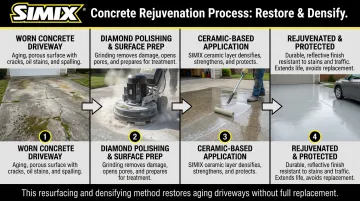
Ceramic-based systems work differently than film-forming coatings: instead of just sitting on top of the slab, they bond into the surface itself. SIMIX's Concrete Rejuvenation System pairs diamond polishing with ceramic chemistry to restore worn concrete rather than replace it, a method already used on warehouse and distribution center floors at a fraction of full slab replacement cost.
The same logic applies to driveways: mechanical resurfacing addresses spalling and surface wear, then the ceramic layer densifies and protects what's left.
Driveway Size and Layout
More square footage means more material and labor hours, but per-foot rates often drop slightly on larger jobs since mobilization costs spread out. Curved or irregular driveways cost more than straight rectangular ones because cutting and edging take extra time. A 400-square-foot driveway might run $1,200–$2,800 to coat, while a 1,000-square-foot driveway often lands between $3,000–$7,000 despite the lower per-foot rate.
Surface Condition and Prep Work
This is where budgets blow up. Contractors need to address:
- Cracks: $0.50–$3 per linear foot, often with a $100–$150 job minimum
- Oil stains and buildup: pressure washing runs $0.30–$0.55 per sq ft
- Spalling or uneven sections: may require resurfacing at $3–$5 per sq ft
- Moisture issues: testing and mitigation add to the scope, though standalone pricing isn't standardized
Labor and Regional Rates
Professional coating labor typically runs $1–$7 per sq ft or $50–$150 per hour, depending on your market. Demand spikes in spring and fall (peak coating season) can push rates higher, while winter often brings better availability and pricing in mild climates. Coastal metro markets often run 20–30% higher than the national average, while rural regions trend toward the lower end.
Accessibility and Site Complexity
Slopes, tight side-yard access, mature landscaping, or a driveway that wraps around a garage all add labor hours. Contractors factor in extra time for hauling equipment and materials around obstacles.
Cost Breakdown of Concrete Driveway Coating
The per-square-foot price quoted online covers only one line of your total investment, so here's the complete cost picture broken down by category:
| Cost Item | Frequency | What It Covers |
|---|---|---|
| Surface prep & repairs | One-time | Power washing, crack filling, moisture testing before application |
| Coating material & application | One-time | Chosen coating type plus professional installation labor |
| Sealing/topcoat | Periodic | Extra protective layer, reapplied every few years depending on wear |
| Maintenance & touch-ups | Recurring | Cleaning products, minor repairs, reapplication as coating ages |
Homeowners who budget only for the advertised "coating" line item often get blindsided when prep and maintenance costs show up on the final invoice. Before signing anything, ask your contractor for an itemized quote that separates these four categories clearly.
Low-Cost vs High-Cost Driveway Coatings — What's the Difference?
Budget epoxy and premium polyaspartic or ceramic systems differ in more than price: durability, maintenance needs, and long-term value all shift with the coating you choose.
| Factor | Lower-Cost Coatings | Higher-Cost Coatings |
|---|---|---|
| Durability & Lifespan | Shorter lifespan; prone to UV fading and cracking within a few years | 10–20+ years of service, with better resistance to weather and chemicals |
| Maintenance Needs | Frequent recoating and touch-up work | Longer intervals between treatments, cutting labor costs over time |
| Long-Term Value | Cheaper today, but reapplication every few years adds up | Higher cost upfront, but lower total cost of ownership across the driveway's life |
SIMIX's Multi-Surface Ceramic Clearcoat targets that higher-durability tier, resisting UV and chemical exposure well past the 10-year mark.
Think of it as buying tires: the cheap set gets you through a couple of seasons, while the premium set costs more but keeps you out of the shop year after year.
How to Estimate the Right Budget (and Avoid Common Cost Mistakes)
Setting the right budget isn't about finding the lowest per-square-foot quote. It's about balancing the upfront cost with long-term performance and how long you expect the coating to last.
Factors to weigh before you set a number:
- Driveway size and current condition
- Climate exposure (UV intensity, freeze-thaw cycles)
- Expected traffic and vehicle weight
- How long you want to go before recoating
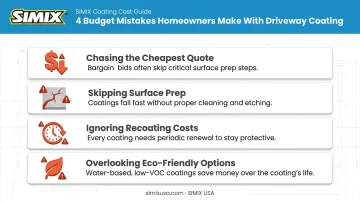
Common mistakes that blow up budgets:
- Chasing the cheapest per-sq-ft quote without checking what's excluded
- Skipping proper surface prep to save money upfront
- Ignoring recoating and maintenance costs in the total lifetime price
- Overlooking low-VOC, eco-friendly coating options that protect both the concrete and household air quality
Coating costs vary widely by material and prep needs, but once you understand where the money actually goes, you can pick a system that fits your budget without sacrificing durability.
Frequently Asked Questions
Are driveway coatings worth it?
Yes, for most homeowners. Coatings protect against cracking, staining, and weather damage while boosting curb appeal. Durable options also cut long-term upkeep enough to offset the upfront cost.
How much does it cost to seal a 200 sq ft driveway?
Installed concrete sealing runs $1.35–$2.50 per sq ft, putting a 200 sq ft driveway at roughly $270–$500. That's generally cheaper than a full coating job.
What's the difference between concrete sealing and concrete coating?
Sealing forms a thin protective film that limits water and chemical penetration. Coating creates a thicker, load-bearing layer built to withstand heavier traffic and physical wear.
Is it cheaper to DIY a concrete driveway coating or hire a professional?
DIY epoxy kits cost about $3 per sq ft in materials, versus $5–$12 installed professionally. DIY saves money upfront but often sacrifices prep quality and longevity.
How long does a concrete driveway coating last?
Epoxy typically lasts 5–7 years (DIY kits closer to 3–5). Polyurea and polyaspartic systems run 10–20+ years with proper installation and maintenance.
What's the best time of year to coat a concrete driveway?
Mild, dry weather works best — most manufacturers require application temperatures between 50–90°F with no rain expected for 24–48 hours, which usually means spring or fall.