Ignore it long enough and the damage compounds. Algae turns walkways slick. Water seeps into unsealed concrete and freezes, cracking the surface from the inside out. What starts as a light cleaning job can turn into a full resurfacing project costing thousands.
This guide breaks down why patio cleaning and sealing matter, the different maintenance tiers involved, the warning signs to watch for, and a practical schedule you can actually follow.
Key Takeaways
- Routine cleaning and periodic sealing protect appearance, safety, and value
- Maintenance falls into four tiers: routine cleaning, deep cleaning, sealing, and restoration
- Watch for red flags like water that no longer beads, recurring algae, fading, or cracking
- Resealing frequency varies by material and climate; pavers typically need it every 3-5 years
- Surface-matched, non-toxic products protect your patio and the people who use it
Why Patio Cleaning and Sealing Matters
A clean, well-sealed patio does more than look nice. It protects one of the most visible parts of your property's exterior, and that visibility matters at resale time.
Homeowners consistently rank landscaping and exterior condition among the first things buyers notice. A 2025 National Association of Realtors report found that more than half of surveyed homeowners believe an attractive exterior and landscape can add at least $20,000 to resale value. A stained, algae-covered patio undercuts that impression fast.
Safety Is the Bigger Concern
Algae and moss don't just look bad. They form a slick biofilm on concrete, pavers, and stone that gets dangerously slippery when wet. OSHA and CDC/NIOSH both classify wet or irregular outdoor surfaces as recognized slip-and-fall hazards, and untreated patios build up exactly this kind of film season after season.
Water Damage Compounds Over Time
Unsealed concrete, natural stone, and pavers are porous. They soak up water, oil, and organic debris, which leads to staining and, in colder climates, structural damage. Water expands by roughly 9% when it freezes, and research from the National Ready Mixed Concrete Association shows that critically saturated concrete is especially vulnerable to this internal pressure. Repeated freeze-thaw cycles turn hairline cracks into major structural problems.
Sealing addresses this directly by:
- Blocking UV rays that fade color and break down surface material
- Preventing water and oil absorption that causes staining
- Reducing weed and moss growth between paver joints
- Extending the usable life of your hardscaping by years
Products formulated specifically for exterior concrete, such as SIMIX's water-based, zero-VOC Multi-Surface Ceramic Clearcoat, deliver this same UV/IR-reflective protection without the harsh fumes of solvent-based sealers.
The Math on Prevention vs. Reaction
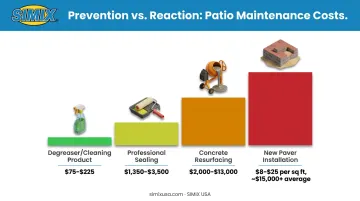
Preventive cleaning and sealing cost far less than reactive repairs. Professional concrete sealing typically runs $1.35 to $2.50 per square foot (roughly $1,350-$3,500 for an average patio), while a full concrete resurfacing project averages $2,000 and can run as high as $13,000 depending on scope.
Compare that to a new paver patio installation at $8-$25 per square foot. A cleaning-and-sealing routine costs a fraction of any of those replacement projects, and starting with a concentrated degreaser in the $75-$225 range is far cheaper than resurfacing later.
Types of Patio Cleaning & Sealing Maintenance
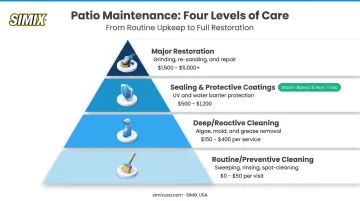
Patio care isn't one-size-fits-all. The right approach depends on your material, local climate, and current condition. Maintenance generally falls into four tiers, ranging from a quick sweep to a full restoration.
Routine / Preventive Cleaning
This is your baseline upkeep : sweeping debris, rinsing with a hose, and spot-cleaning fresh spills before they set into the surface. It's low-cost, requires no special chemicals, and takes minutes.
Best for: well-sealed, low-traffic patios in mild climates. If your patio is already protected and doesn't see heavy foot traffic, weekly or biweekly attention is usually all it needs.
Deep / Reactive Cleaning
Sometimes routine cleaning isn't enough. Visible algae, moss, lichen (black spot), mold, or grease stains call for a deeper intervention.
Here's where product choice actually matters. Using the wrong chemistry can permanently damage your patio:
- Acidic cleaners like vinegar can etch and dull calcareous stone such as limestone and marble
- Bleach can degrade certain wood surfaces and harm nearby vegetation
- Chlorine-based products can strip color from stained or dyed concrete
This is why surface-matched formulas beat generic household cleaners. SIMIX's Multi-Surface Peroxide Cleaner & Degreaser is an NSF-certified, zero-VOC option built around peroxide-based chemistry and engineered surfactants rather than harsh acids or bleach.
It's marketed for exterior surfaces including driveways, patios, sidewalks, and pavers. The formula lifts organic growth and grime without the corrosive side effects common to acid- or bleach-based cleaners.
Sealing & Protective Coatings
Once your patio is clean, sealing creates a barrier against water penetration, UV degradation, staining, and freeze-thaw damage. Not all sealers work the same way:
| Sealer Type | How It Works | Best For |
|---|---|---|
| Penetrating/impregnating | Absorbs into pores, repels water without a surface film | Natural stone, matte finish preference |
| Topical film-forming | Creates a visible protective layer (acrylic, polyurethane, epoxy) | Enhanced gloss, added wear resistance |
| Ceramic coatings | Ultra-thin clearcoat technology | Extended protection between reapplications |
SIMIX's Multi-Surface Ceramic Clearcoat falls into that third category: a water-based, zero-VOC clearcoat with 3-in-1 SPOT-ON technology that creates a transparent barrier against UV, moisture, and staining. It's positioned as an alternative to traditional film-forming sealers for homeowners who want a durable, non-yellowing finish.
SIMIX also sells a Cleaner + Clearcoat Combo, pairing both products for a full clean-and-protect workflow.
Major Restoration
When cleaning and sealing alone can't fix the problem, you're looking at restoration: diamond grinding or polishing for concrete, or re-sanding paver joints where sand has washed out. This tier is needed when damage includes significant cracking, spalling, or staining that's penetrated below the surface.
Restoration costs more than routine maintenance, but it's still far cheaper than a full patio replacement. Angi's benchmark data puts typical patio repair costs at $726-$2,485, with resurfacing running $3-$10 per square foot for minor spalling or surface cracks.
How to Tell If Your Patio Needs Cleaning or Sealing
This checklist highlights the early-warning signs to catch before small problems turn into expensive repairs.
Visible Wear, Staining, or Discoloration
Algae, moss, or dark mildew patches spreading across the surface are the most obvious red flags. Less obvious: a fading, chalky texture or dulling color, which signals UV breakdown of old sealant even before biological growth shows up.
Water Absorption & Sealant Failure
Try the water-droplet test. Splash a small amount of water on the surface:
- Water beads up and sits on top: sealant is still intact
- Water soaks in and darkens the surface: sealant has worn off or was never applied
- Dark spots linger long after rain has stopped: the patio is absorbing moisture it shouldn't
This simple check takes thirty seconds and tells you more than a visual inspection alone.
Safety & Structural Issues
A slippery surface when wet, caused by algae biofilm, is an urgent trigger for cleaning and resealing. Don't wait on this one. Also watch for:
- Visible cracks or spalling on the surface
- Loose or eroded joint sand between pavers
- Uneven settling in high-traffic areas
Recurring Stains or Growth After Cleaning
If algae or stains return within weeks of cleaning, the protective sealant layer is likely gone or was never applied in the first place. Needing touch-up cleaning between every season, rather than once a year, is a clear signal it's time to seal.
Patio Cleaning & Sealing Schedule (General Guidelines)
There's no single universal timeline here. Ideal frequency depends on your patio material, local climate (especially freeze-thaw regions), sun or shade exposure, and how much foot traffic the space sees.
| Frequency | Task |
|---|---|
| Weekly/biweekly | Sweep debris, rinse with a hose, spot-clean fresh spills |
| Monthly | Inspect shaded or damp areas for early algae or moss growth |
| Seasonal (spring & fall) | Deep clean to remove winter grime or prep for weather changes |
| Every 3-5 years (material-dependent) | Reapply sealer or coating based on the water-bead test |
Manufacturer data backs up that range. Belgard recommends resealing concrete pavers every 3 to 5 years, depending on wear. Natural stone sealers typically benefit from a fresh coat annually for best appearance, though a single application can hold up for up to three years outdoors.
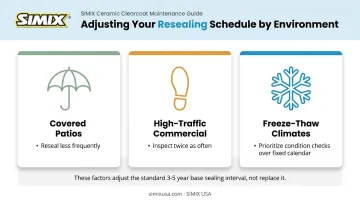
A few adjustments worth noting:
- Covered patios shielded from direct sun and rain generally need resealing less often than uncovered ones
- High-traffic commercial patios wear down faster than residential ones and may need inspection twice as often
- Homes in freeze-thaw climates should prioritize condition checks over sticking to a fixed calendar
Conclusion
Patio cleaning and sealing is an ongoing investment in your outdoor space rather than a single one-time project. The most effective approach blends routine DIY upkeep (sweeping, rinsing, spot-cleaning) with periodic deep cleaning and sealing using surface-appropriate products such as SIMIX's ceramic clearcoat.
Whether you're managing a small residential patio or a larger commercial hardscape, a structured maintenance plan protects both the safety and the long-term value of the surface, regardless of material.
Frequently Asked Questions
How often should you clean and seal a patio?
Routine cleaning should happen weekly to monthly, depending on debris and shade exposure. Sealing is typically needed every 1-5 years depending on material and climate exposure, with heavy traffic shortening that window — pavers often last 3-5 years between applications.
Can you seal a patio yourself, or do you need a professional?
DIY sealing works well for small residential patios with proper surface prep and the right product. Larger or heavily soiled surfaces often benefit from professional-grade application for even, consistent coverage.
What's the difference between patio cleaning and patio sealing?
Cleaning removes dirt, algae, mildew, and existing stains from the surface. Sealing adds a protective barrier that blocks future water absorption, UV fading, and staining. You need both, but they serve different purposes.
Can vinegar or household bleach damage a patio surface?
Vinegar and other acidic cleaners can etch and discolor calcareous natural stone like limestone and marble. Bleach can damage certain wood surfaces and harm nearby plants, making surface-matched cleaners the safer bet.
How long does patio sealant typically last before it needs reapplying?
Lifespan varies by product and exposure. Traditional paver sealers often last 3-5 years, while some natural stone sealers need annual touch-ups. Advanced ceramic coatings are built for extended durability between reapplications.
What is the best time of year to clean and seal a patio?
Focus less on the calendar and more on conditions: most sealers require dry surfaces, moderate temperatures (roughly 50-85°F), and at least 24 rain-free hours to cure properly. Spring and early fall usually meet those conditions.