Many households and small facilities still reach for bleach or ammonia-based sprays out of habit, often without realizing an EPA-recognized oxidizer is already sitting on the shelf. Bleach fumes, ammonia irritation, and chemical residue are real problems that a simpler alternative can often solve.
This guide breaks down the chemistry behind hydrogen peroxide disinfection, where it performs well, which surfaces to avoid, and when a facility needs to move past a store-bought 3% bottle to a certified, professional-grade formula.
Key Takeaways
- Hydrogen peroxide breaks down into water and oxygen, leaving no toxic residue on treated surfaces.
- A 3% solution addresses many bacteria, viruses, and fungi, but contact time affects results.
- Never mix hydrogen peroxide with vinegar, bleach, or ammonia; spot-test metal, stone, or dyed fabric first.
- Institutional kitchens need NSF-certified peroxide cleaners, like SIMIX, for proven dual-action disinfecting and degreasing.
What Is Hydrogen Peroxide and How Does It Work as a Disinfectant?
Hydrogen peroxide (H2O2) is water (H2O) with a loosely bonded extra oxygen atom attached. That extra atom is unstable, which is exactly what makes it useful. On contact with organic material, the molecule releases destructive hydroxyl radicals that attack membrane lipids, DNA, and other essential components inside bacteria, viruses, and fungi.
The decomposition reaction tells the rest of the story:
2 H2O2 → 2 H2O + O2
Once the reaction finishes, only water and oxygen gas remain. Nothing toxic lingers behind, which sets it apart from chlorine-based disinfectants that can leave chemical residue or off-gas fumes.
Concentration Matters More Than People Think
Most household bottles are sold at 3% concentration. According to CDC's medical management guidelines for hydrogen peroxide, solutions above 10% are already corrosive to skin, eyes, and mucous membranes, not just the 30%+ industrial grades some people assume are the real threshold.
Anything labeled "food-grade" at 35% is not intended for home cleaning under any circumstance.
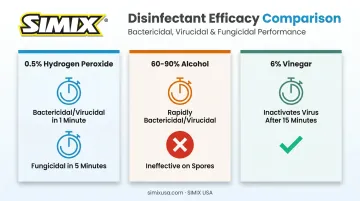
How does it stack up against other pantry disinfectants?
| Disinfectant | Documented performance |
|---|---|
| Accelerated 0.5% H2O2 formula | Bactericidal and virucidal in 1 minute; fungicidal in 5 minutes (CDC) |
| 60-90% alcohol | Rapidly bactericidal and virucidal, but not effective against spores |
| 6% acetic acid (distilled vinegar) | Inactivated SARS-CoV-2 after 15 minutes in one lab study |
Shelf life matters too. Sealed, opaque bottles hold close to full strength for around three years. Once opened, light and heat exposure speed up decomposition, and potency can drop noticeably within a couple of months. Keep the original dark container and store it away from windows or heat sources.
Is Hydrogen Peroxide a Good Disinfectant Cleaner? Efficacy, EPA Status & Limitations
Hydrogen peroxide is a registered disinfectant. The EPA maintains a list of registered hydrogen-peroxide disinfectants effective against bacteria, coronaviruses, fungi, and mold on hard, non-porous surfaces, provided the product label directions are followed exactly.
That last part matters. One EPA-registered 4.25% peroxide concentrate spells out exactly what "effective" means on the label:
- Bacteria: killed in 5 minutes at a 1:16 dilution
- Viruses, including SARS-CoV-2: eliminated in 5 minutes at 1:64
- Mildew: requires 10 minutes at 1:16
Numbers like these separate documented disinfection from a generic marketing claim. SIMIX's Multi-Surface Peroxide Cleaner & Degreaser, for example, carries an NSF-verified 99.9% effectiveness rating against coronaviruses, the kind of third-party validation worth checking before you buy.
Dwell time is the detail most people skip. Spraying and immediately wiping does not disinfect anything. Most surfaces need 5-10 minutes of visible wetness, though exact times vary by formulation, organism, and dilution on the label. Skipping this step is the single biggest reason DIY disinfecting fails.
The Degreasing Myth
Watching hydrogen peroxide bubble on a greasy stovetop feels satisfying, but that reaction doesn't mean it's cutting through fat. Plain hydrogen peroxide is not documented as a substitute for detergent or enzymatic degreasers. Grease removal typically requires lipases or alkaline cleaning agents working alongside the oxidizer, not the oxidizer alone.
Weighed against other common disinfectants, hydrogen peroxide comes with trade-offs. Compared to bleach, it leaves no toxic fumes or chemical residue, but it may need a longer dwell time to hit equivalent disinfection levels. Against rubbing alcohol, it's gentler on some surfaces but slower-acting against certain organisms.
Not every disinfectant claim on a store shelf has been independently verified. That's exactly why third-party testing and NSF certification matter so much for businesses choosing a peroxide-based cleaner, a point we'll return to shortly.
How to Clean and Disinfect with Hydrogen Peroxide Around the Home
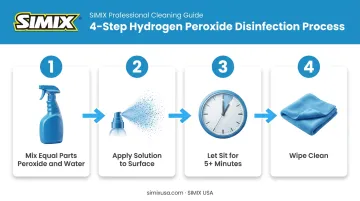
Follow this basic method for most surfaces:
- Mix equal parts hydrogen peroxide and water in a solid-colored spray bottle (light degrades the solution).
- Apply the solution to the surface.
- Let it sit for at least 5 minutes.
- Wipe clean.
Always spot-test an inconspicuous area first, especially on colored or finished surfaces.
Kitchen & Food Prep Surfaces
Countertops, cutting boards, and sinks all respond well to a peroxide spray-and-wipe routine. It sanitizes without leaving chemical taste or residue behind, which matters on surfaces that touch food.
For baked-on grime, a paste made from baking soda and a small amount of peroxide lifts stuck residue before you disinfect. NSF-certified options like SIMIX's Multi-Surface Peroxide Cleaner & Degreaser offer the same food-safe sanitizing power without measuring your own dilution.
Bathroom & Hard Floors
Tubs, tile grout, and toilets benefit from the same spray method. The baking soda-peroxide paste trick works particularly well on grout lines and soap scum, letting the mild abrasive action of baking soda pair with peroxide's oxidizing power.
Laundry & Fabric Stains
For protein-based and organic stains, blood, wine, or grass, dab peroxide directly onto colorfast fabric and let it sit before laundering as usual. It's also a solid whitening booster added to a load of white laundry. Always test a hidden seam first since peroxide can lighten dyed fabric.
What You Should Never Clean with Hydrogen Peroxide
Peroxide's oxidizing power cuts both ways. On the wrong surface, it accelerates damage instead of removing it.
Avoid using it on:
- Bare or unsealed metals — iron, copper, brass, bronze, and similar metals can rust or corrode faster with peroxide exposure
- Natural stone, unsealed hardwood, and dyed or delicate fabrics — these can discolor, bleach, or etch without warning, so a spot test is non-negotiable
- Polished wood and leather — several commercial peroxide labels explicitly exclude these surfaces
Surface damage isn't the only risk — what you combine peroxide with matters just as much.
Never mix hydrogen peroxide with:
- Vinegar — the combination forms peracetic acid, a corrosive compound that can irritate skin, eyes, and lungs
- Bleach or ammonia — combining either with peroxide releases toxic fumes; Poison Control advises storing all cleaning chemicals separately, no exceptions
Given these mixing risks, store peroxide away from other cleaning chemicals in its original container, out of direct light.
From DIY to Professional-Grade: Why Facilities Choose NSF-Certified Peroxide Cleaners
A 3% bottle from the drugstore works fine for spot cleaning at home. Hospitals, schools, and commercial kitchens operate under a different standard entirely. These facilities need documented, repeatable disinfection performance for compliance audits, liability protection, and health inspections, not a "should work" guess.
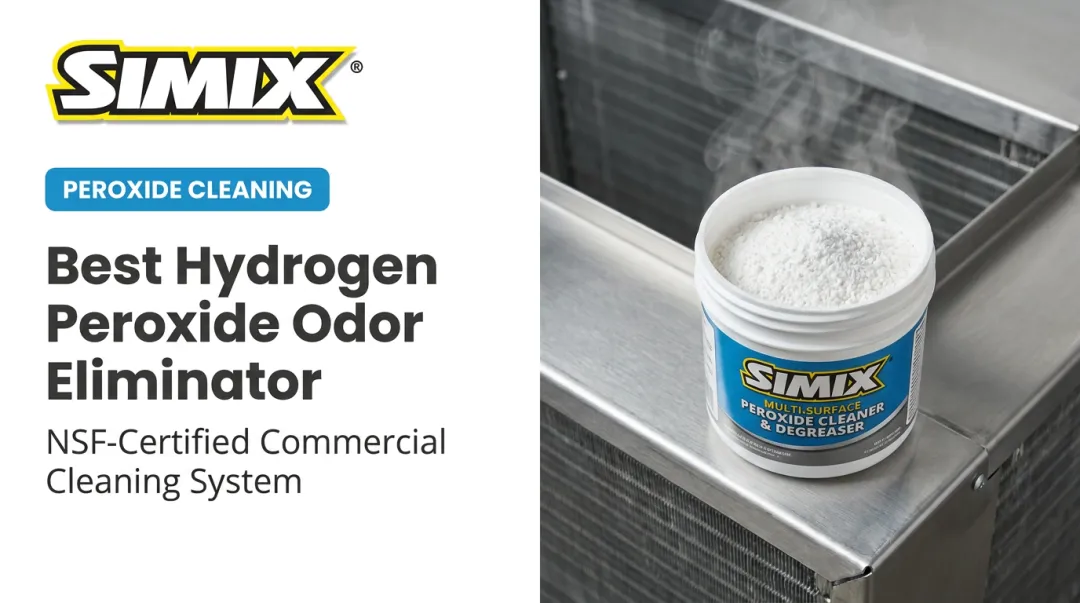
This is where SIMIX's NSF-Certified Multi-Surface Peroxide Cleaner & Degreaser fits in. It's an ultra-concentrated, peroxide-based powder formula engineered specifically for demanding facility environments rather than casual home use.
What sets it apart:
- Water-based, zero-VOC, and non-toxic, making it safe for people, pets, and the surrounding environment
- NSF certified for food-contact and food-service settings
- Delivers 99.9% effectiveness against coronaviruses and other germs on treated surfaces
- Functions as a true dual-action cleaner, disinfecting and degreasing, solving the grease limitation that plain household peroxide can't touch
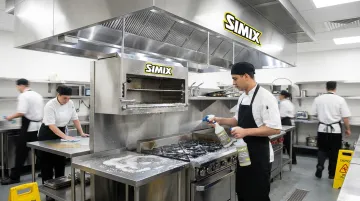
That dual-action piece matters most in commercial kitchens, where grease buildup and sanitation requirements collide daily. The Original Pancake House deployed SIMIX in its commercial kitchen for exactly that reason: one product to cut grease and disinfect surfaces, replacing two separate chemical lines.
Switching to one certified product changes more than kitchen workflow, it also changes how the purchase gets approved. Because SIMIX's system is consumable rather than equipment, it's typically classified as a routine operational expense instead of a capital investment. That classification alone can shave weeks off budget approval, since operational spending skips the review process capital projects require.
The comparison facility managers actually face looks like this:
| Consideration | Drugstore 3% Peroxide | SIMIX NSF-Certified Cleaner |
|---|---|---|
| Audit documentation | None | Full compliance records |
| Food-contact certification | Not certified | NSF certified |
| Degreasing power | Minimal | Dual-action |
| Cost | ~$1-3/bottle | $75-$225 per 5-lb concentrate |
That comparison is the real decision: unverified savings on paper versus documented protection that holds up during a health inspection.
Frequently Asked Questions
Is peroxide a good disinfectant cleaner?
Yes. It's an EPA-recognized disinfectant effective against many bacteria, viruses, and fungi at 3% concentration with proper dwell time. It also breaks down into just water and oxygen, leaving no toxic residue.
What should you not clean with hydrogen peroxide?
Avoid bare metals, natural stone, unsealed hardwood, and dyed fabrics without a spot test first. Never mix it with vinegar, bleach, or ammonia.
How long does hydrogen peroxide need to sit on a surface to disinfect it?
Most household applications need 5-10 minutes of continuous visible wetness. Registered commercial products may specify different times based on their exact formulation.
Does hydrogen peroxide expire or lose potency over time?
An unopened bottle in its original dark container stays close to full strength for about three years. Once opened, exposure to light and heat can reduce potency within a couple of months.
Is hydrogen peroxide safe to use around children and pets?
3% solutions are generally safe with proper ventilation and storage, but they should stay out of reach and never be ingested. Accidental swallowing can cause stomach upset or throat irritation.
Can hydrogen peroxide be used on food-contact surfaces?
Yes, cutting boards and counters can be treated with peroxide when rinsed properly afterward. Commercial kitchens often rely on certified formulations, like SIMIX's NSF-certified Multi-Surface Peroxide Cleaner & Degreaser, for consistent, documented results.