Here's the problem: most "heavy-duty" degreasers weren't built for this. Ammonia sprays, bleach, and Magic Erasers are formulated for raw wood, metal, or grout, not a thin painted film. Use them on cabinets and you risk stripping sheen, dulling color, or softening the finish entirely.
This guide covers degreasers that actually cut grease without wrecking paint, plus the technique that makes or breaks the results.
Key Takeaways
- Painted cabinets need low-moisture, non-abrasive degreasers to protect the cured paint film
- Ammonia, bleach, and Magic Erasers cause most dulled or stripped cabinet finishes
- NSF-certified, peroxide-based degreasers like SIMIX cut grease without harsh solvent chemistry
- Apply cleaner to a cloth (never spray directly), then dry immediately every time
- Weekly light wipe-downs near the stove prevent the need for aggressive degreasing later
Why Painted Cabinet Surfaces Need a Different Degreasing Approach
Painted cabinets aren't raw wood or bare metal. They're coated in a thin, cured film that stays vulnerable to moisture and abrasion long after it feels dry to the touch.
Benjamin Moore's care guide for painted cabinets recommends waiting about 30 days after painting before doing any real cleaning, since the film needs that long to fully cure.
The guide also flags several products to avoid entirely on painted surfaces:
- Bleach
- Ammonia
- Alcohol
- Magic Erasers
- Scouring pads
Moisture is the quieter threat. Lingering water on a painted door front can cause problems the longer it sits, which is why the same guide advises blotting excess liquid with a dry towel rather than letting it air-dry.
Grease adds its own complications. Cabinets near the stove take the brunt of airborne cooking oil, and grease buildup has to be fully removed before any repainting can happen, according to Sherwin-Williams.
The longer that film sits, the more it hardens, making it harder to lift without aggressive scrubbing.
That's the core tension: the cabinets that need degreasing most are also the ones most at risk from the wrong product. Not every degreaser handles that balance well, which is why the list below focuses on options that do.
Best Degreasers for Painted Kitchen Cabinets That Actually Work
The products below were evaluated on four criteria: real grease-cutting ability, a non-abrasive and non-caustic formula, ease of controlled application, and documented safety on painted or finished wood.
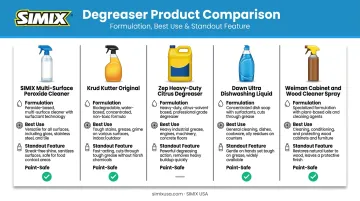
SIMIX Multi-Surface Peroxide Cleaner & Degreaser
SIMIX makes an NSF-certified, peroxide-based degreaser that skips ammonia and bleach chemistry altogether. It's water-based and formulated with oxidative cleaning agents and engineered surfactants designed to break down grease and biological residue without attacking the substrate underneath.
The differentiator: it's a zero-VOC, non-toxic formula built to deliver commercial-grade degreasing in kitchens, restaurants, and food-service facilities, but it's still gentle enough for households with kids and pets. That's a different profile than a typical grocery-store degreaser, most of which lean on ammonia or solvents to get comparable cutting power.
| Attribute | Details |
|---|---|
| Formulation | Peroxide-based, NSF certified, water-based, zero-VOC |
| Best Use Case | Heavy grease buildup on painted cabinets near stovetops, without dulling the finish |
| Notable For | Non-toxic, home-safe profile paired with professional-grade cleaning performance |
Krud Kutter Original Concentrated Cleaner/Degreaser
Professional cabinet painters and refinishers reach for Krud Kutter Original constantly, mostly for prep work before a repaint. Rust-Oleum, its manufacturer, describes it as a water-based blend of biodegradable surfactants and emulsifiers.
The adjustable dilution is the real selling point. Cabinet refinishers commonly dilute it anywhere from a strong 3:1 mix for heavy grime down to a mild 10:1 ratio for routine maintenance, letting you match strength to how bad the buildup actually is.
One caveat worth knowing: the manufacturer notes it can remove dried latex paint, so a hidden-spot test matters more here than with milder options.
| Attribute | Details |
|---|---|
| Formulation | Water-based, biodegradable surfactant concentrate |
| Best Use Case | Pre-paint prep work and periodic deep cleaning of painted cabinets |
| Notable For | Adjustable dilution for customizable cleaning strength |
Zep Heavy-Duty Citrus Degreaser
Zep's citrus-oil formula (built around d-limonene) is a go-to for cabinets that have been neglected for years rather than months. It's widely available at hardware stores and comes ready to spray.
It's strong enough to break down years of baked-on grease in a single application, yet it wipes clean without leaving a tacky residue that just attracts more dust. That said, Zep's own product listings mention appliances, stovetops, and enamel surfaces, not painted cabinetry specifically, so treat it as a spot-tested option rather than an automatic pick for delicate finishes.
| Attribute | Details |
|---|---|
| Formulation | Citrus-oil based, ready-to-use spray |
| Best Use Case | Cabinets with heavy, long-neglected grease buildup |
| Notable For | Strong single-application performance on stubborn residue |
Dawn Ultra Dishwashing Liquid
Dawn is the gentlest option on this list, and that's exactly why it's so widely recommended. Its surfactants are designed to break down grease molecules through emulsification rather than chemical stripping.
Diluted properly, roughly a teaspoon per quart of warm water, it's the safest routine option for glass-front cabinet frames and everyday upkeep. Pair it with a non-scratch sponge (never anything abrasive) for spots with a bit more grease clinging on.
| Attribute | Details |
|---|---|
| Formulation | Mild surfactant-based dish soap, diluted in water |
| Best Use Case | Light-to-moderate grease and routine upkeep |
| Notable For | Lowest risk of finish damage among common household options |
Weiman Cabinet and Wood Cleaner Spray
Weiman built this one specifically for cabinets and finished wood, not repurposed from an oven-cleaner or all-purpose formula. The label explicitly lists painted wood as an approved surface, which is more than most degreasers on this list can claim.
What sets it apart: it dissolves baked-on grease while leaving behind a light shine, functioning as both a cleaner and a finish enhancer in one pass. Spray it onto a soft cloth (not the cabinet directly) and wipe immediately, per the manufacturer's own directions.
| Attribute | Details |
|---|---|
| Formulation | Wood- and finish-specific cleaning spray |
| Best Use Case | Painted or finished cabinets needing both degreasing and a polished look |
| Notable For | Purpose-built for cabinetry rather than general surfaces |
How We Chose These Degreasers
Most homeowners default to whatever's under the sink, which usually means ammonia glass cleaner, diluted bleach, or a Magic Eraser pulled from the pantry closet. All three seem reasonable, yet none belongs on painted cabinets.
Magic Erasers are made of melamine foam, which acts like extremely fine sandpaper. Ammonia genuinely cuts grease well, but repeated exposure is too harsh for a painted film over time, and bleach falls into the same category.
We weighed four factors when building this list:
- Paint-safe formulation: no bleach, no ammonia, no abrasive additives
- Proven grease-cutting efficacy: verified through manufacturer data or professional refinisher use
- Verified certifications: NSF status where applicable, ingredient transparency
- Consistent results on painted surfaces specifically, not just "multi-surface" marketing claims
The stakes here go beyond appearance. Strip or dull a painted finish, and the fix isn't quick: sanding, re-priming, and repainting entire cabinet doors, a job that costs far more than any bottle of degreaser.
How to Safely Degrease Painted Cabinets Without Damaging the Finish
Even the right product can go wrong with the wrong technique. Here's the process that keeps grease-cutting power on your side without putting the finish at risk.
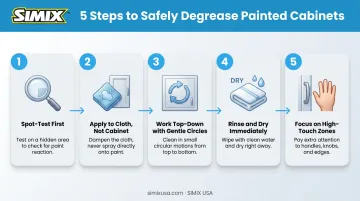
- Spot-test first. Apply your chosen degreaser to a hidden area, like the inside of a door, and wait a few minutes. Check for discoloration, softening, or a change in sheen before treating the whole cabinet.
- Apply to a cloth, not the cabinet. Dampen a microfiber cloth with a peroxide-based, NSF-certified degreaser—such as SIMIX's Multi-Surface Cleaner—rather than spraying directly onto the surface. Wring it so it's damp, not dripping. Direct spray oversaturates painted wood and pushes moisture into seams.
- Work top-down with gentle circles. Clean door fronts, edges, and frames using light circular motions. Skip abrasive pads or scouring sponges entirely, even ones marketed as "non-scratch."
- Rinse and dry immediately. Follow with a clean, water-dampened cloth to lift cleaner residue, then dry with a towel right away. Don't let moisture sit on the painted surface.
- Give extra attention to high-touch zones. Handles, edges, and the toe-kick collect hand oils faster than flat door fronts and often need a second pass.
Prevention beats deep-cleaning every time. A splatter guard or range hood while cooking, combined with a quick weekly wipe-down near the stove, cuts down how often you need a full degreasing session in the first place.
Conclusion
Choosing a degreaser for painted cabinets comes down to one priority: protecting the paint film while still cutting through grease. Raw chemical strength matters less than that balance.
Before you grab a bottle, weigh ingredient safety, dilution flexibility, and whether the product has actually proven itself on painted surfaces, not just metal or laminate. NSF-certified, non-toxic options like SIMIX's Multi-Surface Peroxide Cleaner & Degreaser offer a dependable middle ground: enough cutting power for real grease buildup, without the harsh chemistry that puts your paint job at risk.
Frequently Asked Questions
Will Dawn dish soap damage painted kitchen cabinets?
Diluted Dawn is safe when applied with a soft cloth and dried immediately afterward. Avoid letting it sit on the surface or scrubbing with anything abrasive.
Can I use a Magic Eraser on painted cabinets?
No. Consumer Reports classifies Magic Erasers as abrasive melamine foam, and they can strip or dull painted finishes. Stick with a soft microfiber cloth instead.
Does vinegar damage painted cabinet finishes?
Vinegar's acidity can dull certain paint sheens with repeated use. Some homeowners use it diluted without issue, but a peroxide or citrus-based degreaser carries less risk overall.
How often should painted kitchen cabinets be degreased?
Wipe down cooking-area cabinets weekly, and plan a deeper degreasing session every one to three months depending on how often you cook.
What's the difference between a degreaser and an all-purpose cleaner?
Degreasers use surfactants or oxidative chemistry built to break down oil and grease molecules. All-purpose cleaners are milder and struggle with baked-on residue.
Is ammonia safe to use on painted cabinets?
Ammonia cuts grease effectively, but it's too harsh for painted surfaces with repeated use. Non-toxic, oxygen-based cleaners are a safer long-term choice.