Introduction
"Membrane roof coating" gets tossed around a lot in commercial roofing conversations, and professionals often mix it up with liquid-applied membrane systems. They're not the same thing, and the difference matters.
Facility managers staring at an aging TPO or EPDM roof face a real question: is coating a maintenance fix, or does it count as a full roofing decision? What does it cost? How long will it hold up?
This article breaks down what membrane roof coating means, the main coating types available, realistic benefits, and how to decide whether it fits your building. We'll also cover cost ranges, lifespan expectations, and warning signs that coating alone won't cut it.
Key Takeaways
- Membrane roof coating maintains existing single-ply roofs rather than replacing them
- Acrylic, silicone, and polyurethane chemistries each suit different drainage and traffic conditions
- Coating costs a fraction of tear-off and replacement per square foot
- Structurally sound roofs with only cosmetic wear are the best coating candidates
- A professional inspection should precede any coating or replacement decision
What Is Membrane Roof Coating?
Membrane roofing refers to single-ply systems like TPO, EPDM, and PVC. These sheet-based coverings dominate flat and low-slope commercial buildings because they're lightweight, seam-welded, and relatively quick to install.
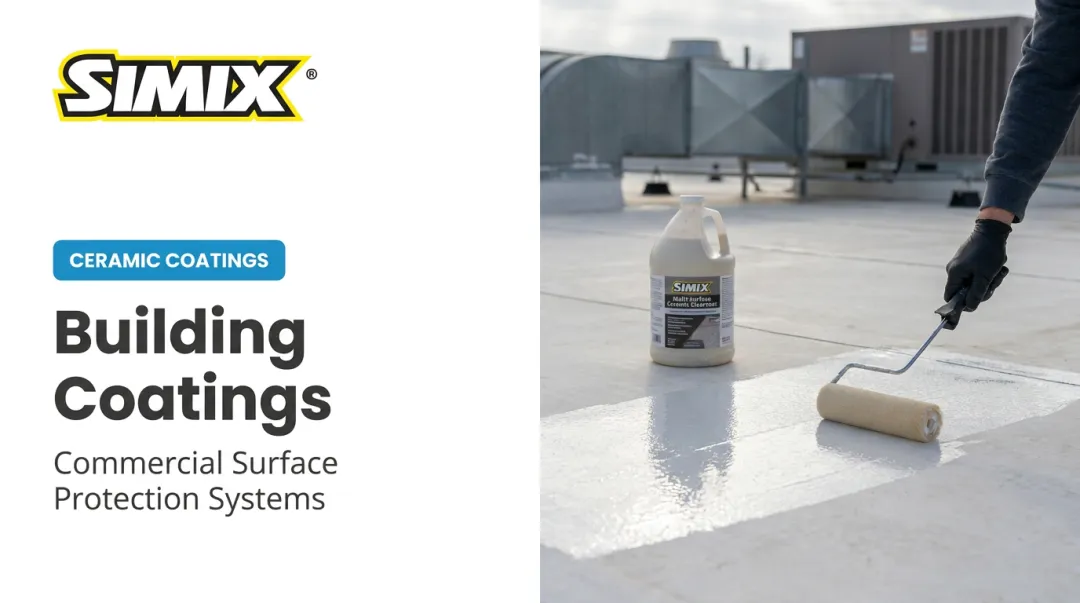
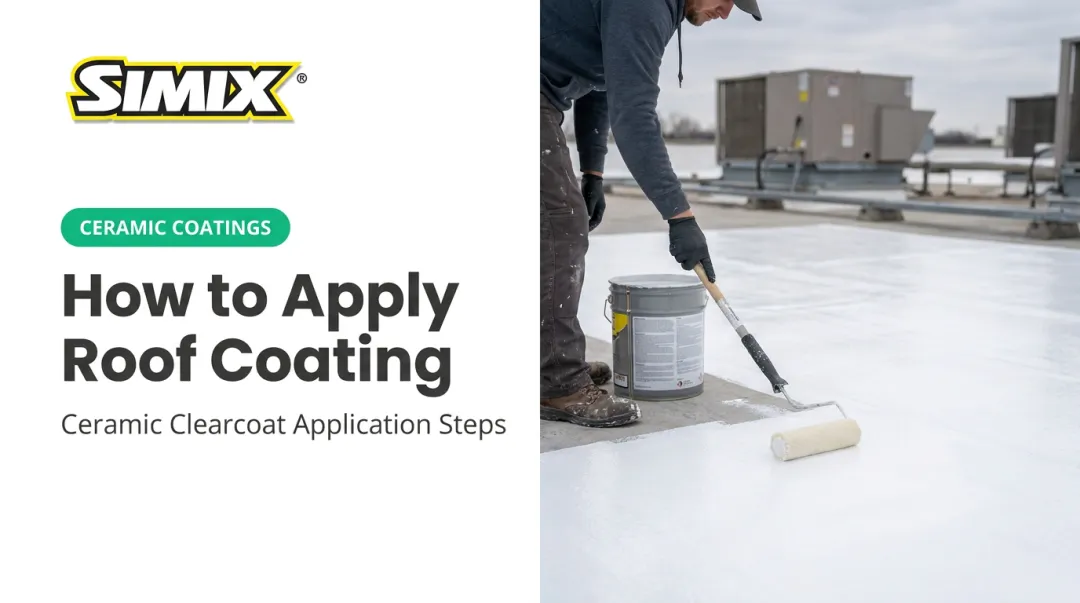
Roof coating, on its own, is a fluid-applied protective layer added over an existing roof surface. It's brushed, rolled, or sprayed on, and it cures to add reflectivity, seal minor wear, and extend the life of whatever it's covering.
Put the two together, and membrane roof coating is a fluid-applied elastomeric layer formulated specifically to bond with single-ply membrane surfaces. It protects the roof without requiring a full tear-off.
How Membrane Roof Coating Differs From a Liquid-Applied Membrane
This distinction matters more than most facility managers realize. Under the 2024 International Building Code, a roof coating is defined as a fluid-applied product used for maintenance or repair.
A liquid-applied membrane, by contrast, is regulated as a roof covering system in its own right, with its own slope requirements and chemistry-specific testing standards.
A coating goes over an already-installed membrane roof as a protective layer, while a liquid-applied membrane can serve as the primary waterproofing system itself. Confusing the two can create warranty problems and unrealistic expectations about what the product is actually doing for your roof.
How Membrane Roof Coating Works
The liquid coating cures into a seamless, elastomeric film once applied. That film seals minor seams and small punctures while shielding the underlying membrane from UV exposure, moisture intrusion, and the constant expansion and contraction caused by thermal cycling.
Think of it as a renewable skin over a roof that's still structurally sound but showing its age.
Types of Coatings Used on Membrane Roofs
Not every coating chemistry performs the same way, and picking the wrong one for your roof's conditions is a common (and costly) mistake.
| Coating Type | Best For | Watch Out For |
|---|---|---|
| Acrylic | Reflective, well-drained roofs | Ponding water |
| Silicone | Ponding water, UV exposure | Dirt pickup over time |
| Polyurethane | Foot traffic, mechanical equipment | Higher material cost |
| Ceramic | Reflectivity plus durability | Newer category, less standardized data |
Acrylic Coatings
Acrylic is the cost-effective, highly reflective option. It performs well on membranes with positive drainage and moderate climates. Where it struggles is ponding water. Standing water can soften and degrade acrylic film over time, so it's not the right call for low spots that hold water after rain.
Silicone Coatings
Silicone brings a higher solids content and superior resistance to ponding water and UV degradation. It's the go-to for roofs with persistent drainage issues. The trade-off: silicone tends to attract dirt over time, which can dull reflectivity somewhat between recoating cycles.
Polyurethane Coatings
Polyurethane is the most impact- and traffic-resistant option on this list. If your roof sees regular foot traffic for HVAC maintenance or hosts mechanical equipment, polyurethane's toughness makes it a practical fit where acrylic or silicone might wear through faster.
Advanced Ceramic Roof Coatings
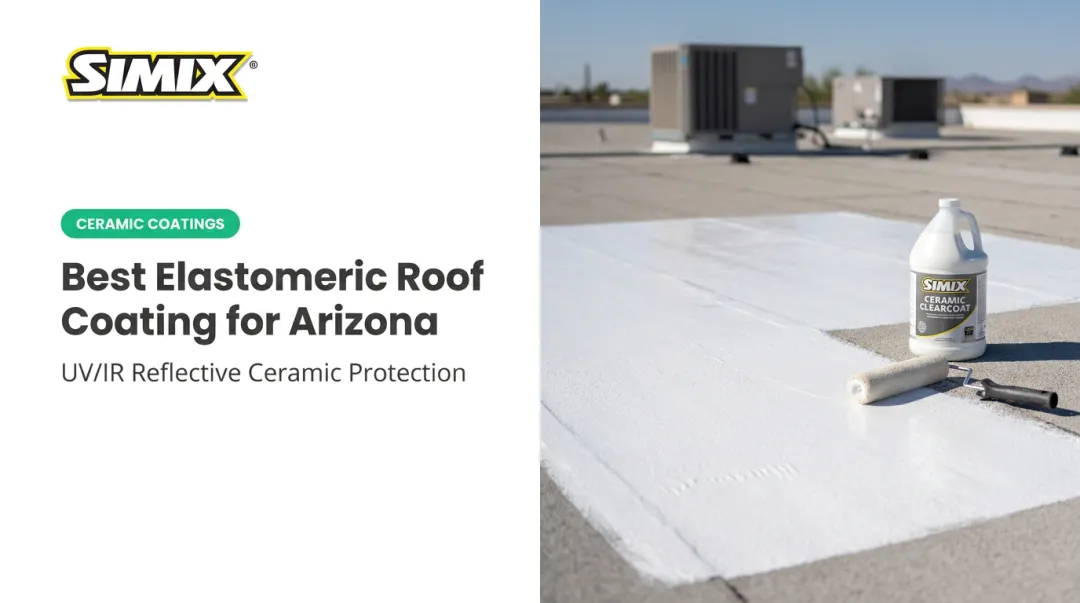
Ceramic-based coatings are a newer roof protection category, pairing reflective performance with added durability. SIMIX's roof coating system falls into this category. It's engineered to reduce roof-related energy consumption by an estimated 15% to 30%, with a 20-year longevity rating cited by the manufacturer.
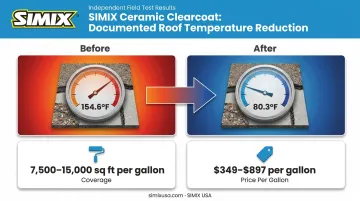
In documented surface temperature testing, a white membrane roof treated with four coats of SIMIX Ceramic Clearcoat dropped from 154.6°F to 80.3°F, with cooler surface temperatures holding nine months after application. The product covers roughly 7,500 to 15,000 square feet per gallon, depending on surface texture, at a price point of $349 to $897 per gallon.
Matching Coating Type to Membrane Material
Choosing the right chemistry is only half the equation—the membrane underneath determines how well any coating actually bonds. EPDM membranes, typically black, usually need a compatible primer before acrylic or silicone application goes on. Skipping primer on EPDM is one of the most common causes of adhesion failure. TPO and PVC membranes, often already white and reflective, don't need primer as urgently but still benefit from renewed UV protection and seam reinforcement as the factory coating ages.
Benefits of Coating a Membrane Roof
A quality coating delivers measurable operational value beyond a fresh appearance.
- Energy efficiency: Reflective coatings lower rooftop temperatures and cut cooling loads. The U.S. Department of Energy estimates savings up to $0.20 per square foot annually, depending on climate and insulation levels.
- Extended service life: Coating adds years of protective life to an aging membrane without triggering a full replacement, based on manufacturer warranty terms.
- Cost savings: Coating a membrane roof typically costs a fraction of tear-off and replacement, making it an attractive budget option for facilities managing capital constraints.
- Leak and seam protection: The cured film creates a seamless barrier over existing seams and minor membrane damage, sealing vulnerabilities that would otherwise worsen.
- Sustainability: Coating keeps old membrane material out of landfills. Low-VOC, non-toxic formulations, like SIMIX's water-based system, support green building goals without harsh chemical exposure.
Membrane Roof Coating vs. Membrane Replacement
Coating makes sense when the membrane itself is structurally sound. If you're dealing with surface-level wear, minor UV degradation, or a handful of small leaks, coating addresses the problem without the expense of tear-off—often cutting roof-related energy costs by 15-30% in the process.
Replacement, or full tear-off and installation of a new membrane, becomes the right call when:
- Membrane failure is widespread rather than isolated
- Ponding water has caused significant substrate damage
- The deck or insulation underneath shows deterioration
Coating a membrane that's already failing structurally just delays an inevitable replacement, often at greater eventual cost. A professional roof inspection remains the best way to determine which path fits your building before committing either way.
Cost and Lifespan of Membrane Roof Coatings
What Drives Cost
Several variables shape total project cost:
- Coating chemistry (acrylic, silicone, polyurethane, or ceramic)
- Roof size and current condition
- Surface preparation needs, including cleaning and priming
- Labor rates in your region
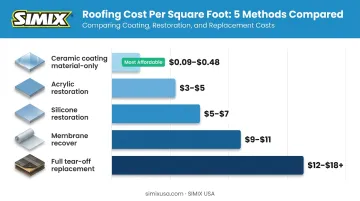
Henry's 2025 restoration estimates put acrylic restoration coating at $3 to $5 per square foot and silicone at $5 to $7 per square foot. Membrane recover projects cost more, at $9 to $11 per square foot. Full tear-off sits at the top of the range: $12 to $18-plus per square foot. Material-only costs for a ceramic system like SIMIX's, applied at the recommended four coats, run roughly $0.09 to $0.48 per square foot before labor.
What Drives Lifespan
Lifespan depends on coating type, climate exposure, and how consistently facility teams maintain the roof. Manufacturers offer restoration warranties ranging from 10 to 25 years, though these are contractual terms rather than guaranteed service-life measurements.
Maintenance habits matter more than the warranty paper suggests. Periodic recoating, following manufacturer-recommended intervals, extends the protective life of the system. Skipping recoating cycles is one of the fastest ways to shorten a coating's effective performance.
Is Membrane Roof Coating Right for Your Facility?
Good Candidates
Your roof is likely a strong coating candidate if it shows:
- Moderate age with no history of major leaks
- Only cosmetic or minor UV-related surface wear
- Intact seams and stable, dry decking underneath
Warning Signs
Coating alone probably won't solve the problem if you're seeing:
- Seam separation or membrane lifting
- Chronic ponding water that doesn't drain within 48 hours
- Soft spots or visibly damaged decking beneath the membrane
Before starting any project, consult a roofing professional or review manufacturer application guidelines. SIMIX, for example, publishes third-party certification data and documented case studies showing 15–30% reductions in roof energy consumption with a 20-year longevity rating, giving facility managers concrete benchmarks for evaluating fit.
Frequently Asked Questions
Can you coat a membrane roof?
Yes. Most single-ply membrane roofs, including TPO, EPDM, and PVC, can be coated as long as the surface is clean, structurally sound, and compatible with the chosen coating chemistry.
How much does it cost to install a membrane roof?
Installation cost depends on membrane type, roof size, and labor rates. Coating an existing membrane is typically far less expensive than installing a new roofing system from scratch.
How long will a membrane roof last?
TPO membranes generally last 20-30 years, PVC around 15-30 years, and EPDM 10-15 years, according to GAF's published ranges. Coating can extend that lifespan further by protecting the surface from UV and weathering damage.
What type of coating works best on TPO or EPDM roofs?
Silicone suits ponding-prone areas thanks to its water resistance, while acrylic works well on well-drained, reflective roofs. EPDM typically needs a compatible primer before either coating type is applied.
Does coating a membrane roof void its manufacturer warranty?
Using manufacturer-approved coatings and following installation guidelines typically preserves warranty coverage. Unauthorized products or improper application, however, may void it, so securing written approval beforehand is recommended.
How often should a membrane roof be recoated?
Recoating intervals vary by coating type and climate exposure, with many systems needing renewal every 10-20 years. Regular inspections help determine the right timing rather than relying on a fixed schedule alone.