Pavers are porous. They soak up oil fast, and the longer a stain sits, the deeper it travels into the material. Once oil settles in, it doesn't just look bad, it can also weaken the bond of any sealant you apply later.
This guide walks through how to identify the type of oil stain you're dealing with, clean it properly (whether it's fresh or months old), reseal your pavers the right way, and stop future spills from becoming permanent eyesores.
Key Takeaways
- Fresh oil stains are dramatically easier to remove than oil that's soaked in for weeks
- Dry pavers completely before sealing to prevent trapped moisture and residue
- Choose absorbents for fresh spills, poultice or degreaser for set-in stains
- Reseal every 3-5 years based on traffic and weather exposure to maintain stain resistance
Why Cleaning and Sealing Oil Stains Properly Matters
Oil stains aren't just a cosmetic problem. Trapped hydrocarbons can slowly degrade the paver surface itself and break down the polymeric sand holding your joints together. Left unaddressed, that damage spreads beyond the stain's visible edges.
Here's the mistake a lot of homeowners make: sealing over a stain instead of removing it first. Sealants aren't designed to lift existing contamination; they're built to prevent future absorption, not erase what's already embedded. Seal over an oil stain, and you've locked it in permanently under a glossy or matte finish.
The Real Cost of Waiting
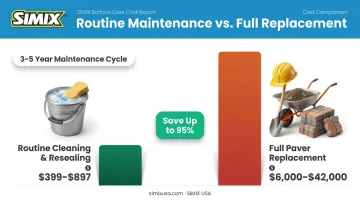
According to Belgard, pavers should generally be cleaned and resealed every 3 to 5 years, with the exact timing depending on wear and traffic. Skip that maintenance window and stains have far more time to work their way into the material.
Compare that modest upkeep cost to the alternative. This Old House's driveway cost data shows paver repair materials running $10-$50 per square foot, with full replacement of a typical driveway landing anywhere from $6,000 to $42,000. Routine cleaning and resealing is a fraction of that.
Keep in mind:
- Untreated oil weakens joint sand over time, not just surface color
- Sealing over contamination traps it permanently
- Replacement costs dwarf routine maintenance spending
Types of Oil Stains and Matching the Right Cleaning Method
Not every oil stain needs the same treatment. How fresh, how deep, and how large the stain is should drive your approach.
Fresh Oil Stains (Same-Day to a Few Days Old)
Fresh stains sit mostly on the surface, which makes them the easiest to pull out. Speed matters here more than anything else.
- Absorb immediately with cat litter, baking soda, or cornstarch spread directly over the spot
- Let the absorbent sit for a few hours before sweeping it away
- Follow up with dish soap and hot water, scrubbing gently with a nylon brush
- Rinse thoroughly once the soap has lifted the residue
For same-day spills, this combination is usually enough — no specialty products needed.
Old or Set-In Oil Stains (Weeks to Months Old)
Older stains have soaked into the paver's pores, so surface treatments alone won't cut it; these need something with more lifting power.
A poultice treatment, or an industrial-strength degreaser, is typically necessary. This is where a peroxide-based, NSF-certified option like the SIMIX Multi-Surface Peroxide Cleaner & Degreaser fits in. It's formulated to break down embedded grease without relying on harsh acids that can etch or discolor concrete paver surfaces.
Avoid these common but risky shortcuts:
- Muriatic acid: highly corrosive and known to etch or discolor concrete pavers
- Bleach mixed with vinegar or ammonia: never combine these; the fumes are hazardous
- Wire brushes: can leave metal particles behind that cause rust staining and scratch the surface
Step-by-Step Guide: How to Clean Oil Stains from Driveway Pavers
Before starting, gather these materials:
- Absorbent granules (cat litter, baking soda, or diatomaceous earth)
- Stiff nylon-bristle brush
- Bucket and a paver-safe degreaser (SIMIX's NSF-certified Multi-Surface Peroxide Cleaner & Degreaser is one non-abrasive option) or dish soap
- Garden hose or pressure washer with a wide fan tip
- Protective gloves
Follow these steps in order:
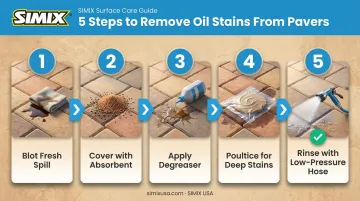
- Blot, don't rub, fresh spills with a rag or paper towel right away. Rubbing pushes oil deeper into the pores.
- Cover with absorbent material and let it sit 6-24 hours before sweeping it off.
- Apply a paver-safe degreaser directly to the stain. Let it dwell per the label's instructions, then scrub in small circular motions with a nylon brush to avoid scratching the surface.
- Treat deep-set stains with a poultice — mix your degreaser with diatomaceous earth or baking soda, cover with plastic wrap, and leave for 24-48 hours before scraping off and rinsing.
- Rinse thoroughly with a hose or pressure washer using a wide fan tip. Techniseal's own restoration guidance recommends keeping pressure around 1,500 psi to avoid dislodging joint sand or damaging the paver surface.
Once rinsed, let the pavers air-dry completely, typically 24-48 hours, then inspect in natural daylight. Repeat spot treatment on any lingering shadow before moving to sealing.
How to Properly Seal Pavers After Removing Oil Stains
Sealing only works on a surface that's completely clean, dry, and residue-free. Trapped moisture or leftover oil underneath a sealant causes bubbling, discoloration, or poor adhesion that shows up within weeks.
Before you seal, confirm the pavers have had at least 24-48 hours of dry weather. If it rained recently or the surface still feels cool and damp to the touch, wait it out.
Choosing the Right Sealer Type
| Sealer Type | Appearance | Best For |
|---|---|---|
| Penetrating | Natural, matte look | Driveways where original stone color matters most |
| Film-forming/topical | Glossy or satin sheen | High-traffic areas needing stronger stain resistance |
Penetrating sealers soak into the pores and react beneath the surface, so they don't change the paver's look much. Film-forming sealers sit on top, creating a visible protective layer that also tends to hold joint sand more firmly in place. Climate plays a role too. Penetrating sealers let the paver breathe, which helps in freeze-thaw regions, while film-forming sealers offer better protection on driveways that see frequent vehicle and oil exposure.
Application Basics
- Apply sealant evenly with a low-pressure sprayer or roller in thin coats
- Avoid pooling in low spots or joint lines
- Follow manufacturer-recommended drying and cure time before allowing vehicle traffic
- Replenish polymeric joint sand before sealing to lock in stability and block future weed growth and staining pathways
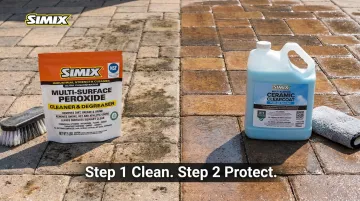
A cleaner-and-protector combination works well here. SIMIX's two-step system pairs the peroxide degreaser (Step 1) with a ceramic-based clearcoat (Step 2), ensuring the surface is properly degreased before any protective topcoat goes on. That sequencing matters more than the product itself: skip proper degreasing, and even a premium sealant won't perform as intended.
Preventing Future Oil Stains and Maintenance Schedule
Prevention beats cleanup every time. A little prep now saves hours of scrubbing later.
- Keep absorbent granules and a degreaser, such as SIMIX Multi-Surface Peroxide Cleaner & Degreaser, on hand in the garage for immediate spill response
- Place a drip mat or tray under any vehicle with a known leak
- Sweep pavers regularly, especially in fall, to clear leaves and organic debris that can stain over time
A simple maintenance rhythm helps:
| Task | Frequency |
|---|---|
| Sweeping and debris removal | Regularly, especially fall |
| Surface inspection for new stains | Spring and fall |
| Full cleaning | Annually, each spring |
| Resealing | Every 3-5 years, sooner for high-traffic driveways, using a ceramic clearcoat like SIMIX |
None of this takes much time, but skipping it is exactly how a small spill turns into a permanent dark patch that outlasts three seasons of scrubbing.
Frequently Asked Questions
What do professionals use to clean pavers?
Professionals typically use paver-safe degreasers or peroxide-based cleaners paired with soft nylon brushes and low-pressure rinsing. They avoid acids that can etch or discolor the surface.
Can I use dish soap to remove oil stains from pavers?
Yes, dish soap works well for fresh, light oil stains when combined with hot water and scrubbing. It's less effective once oil has penetrated deep into older, set-in stains.
How long should I wait before sealing pavers after cleaning oil stains?
Wait at least 24-48 hours of dry weather to make sure pavers are completely dry. Sealing over damp or residue-covered surfaces causes bubbling and poor adhesion.
Will pressure washing damage my paver driveway?
No, not if you use moderate settings with a wide fan nozzle. High pressure or a narrow, concentrated nozzle can etch pavers or blast out joint sand.
Can baking soda remove oil stains from concrete pavers?
Baking soda works well as an absorbent for fresh spills but isn't strong enough alone for old, deeply penetrated stains. Pair it with a degreaser for tougher jobs.
How often should I reseal my driveway pavers to prevent stains?
Reseal every 3-5 years on average, leaning toward the shorter end for driveways with heavy vehicle traffic or frequent oil exposure.