That's the problem. Many teams default to generic paint or wait until something fails, then scramble for a reactive repair. The result: premature equipment failure, climbing energy bills, and capital replacement projects nobody budgeted for.
This guide breaks down the major types of building coatings, what they actually protect against, how to choose the right one for your facility, and how next-generation ceramic technology is changing what a coating can do.
Key Takeaways
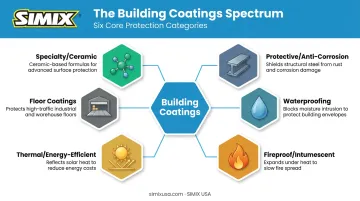
- Building coatings fall into six categories: anti-corrosion, waterproofing, fireproofing, thermal, floor, and ceramic.
- The right coating measurably cuts energy consumption and extends asset life, not just curb appeal.
- Substrate, exposure, and code requirements should drive selection, not the lowest bid.
- Ceramic and photocatalytic systems now improve HVAC efficiency and indoor air quality simultaneously.
Types of Building Coatings
A building coating is a functional layer applied to a substrate, whether metal, concrete, or membrane, to protect, insulate, or enhance performance beyond looks. That's what separates a true coating from decorative paint: it's selected for what it does under stress, not what color it comes in. Here's how the major categories break down.
Protective & Anti-Corrosion Coatings
Epoxy and urethane systems are the workhorses of industrial corrosion protection. Two-part epoxies bond tightly to steel and concrete, forming a hard barrier that resists chemicals and heavy foot traffic. Urethane topcoats add UV stability on top.
Common applications include:
- Structural steel framing and connections
- Pipelines and process piping
- Storage tanks, interior and exterior
- Industrial concrete slabs
The catch: epoxies are picky about cure conditions. One common two-component polyurethane topcoat can't be applied below 50°F, above 80% relative humidity, or within 5°F of the dew point. Get that window wrong and adhesion suffers for the life of the coating.
Waterproofing & Sealant Coatings
Concrete sealing and elastomeric coatings stop water from finding its way into pores, cracks, and expansion joints. Left untreated, water that enters concrete can freeze, expand, and cause spalling, a slow-motion failure that worsens every winter.
Elastomeric coatings bridge hairline cracks while staying flexible through temperature swings. Anti-slip additives, blended right into the coating, add traction on stairwells and walkways where fall risk runs highest.
That risk is real: the Bureau of Labor Statistics recorded 844 fatal work injuries from falls, slips, and trips in 2024. Traction coatings won't eliminate that risk alone, but they're a meaningful piece of a broader safety program.
Fireproof & Intumescent Coatings
Intumescent coatings look like ordinary paint until heat hits them. Then they expand into an insulating char that slows flame spread across structural steel, ductwork, and exposed wiring.
Building codes treat these systems as mandatory life-safety installations, requiring special inspection of field-applied intumescent materials on structural elements. That means periodic reinspection and, when film thickness falls out of spec, reapplication to keep certified fire-rating compliance intact.
Thermal & Energy-Efficient Coatings
Reflective "cool roof" coatings bounce solar radiation away instead of absorbing it. In warm climates, a Lawrence Berkeley National Laboratory cool roof analysis found that switching to a cool roof can cut annual AC energy use by up to 15% on a single-story building.
A white commercial roof can save up to $0.20 per square foot annually in energy costs. Large facilities now specify custom-color solar-reflective formulations to capture that performance without settling for an all-white roof.
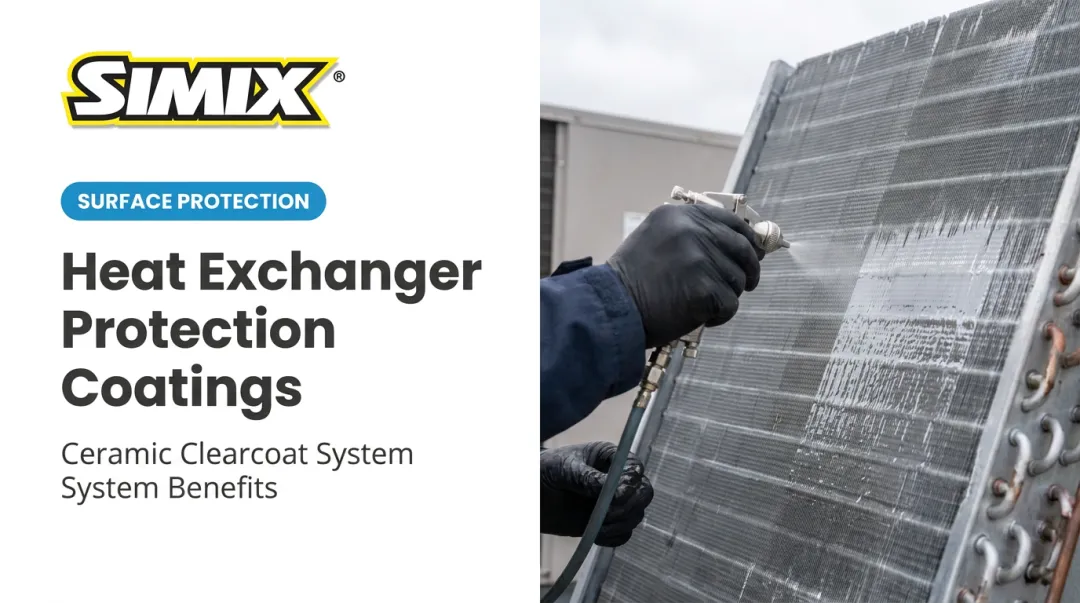
A newer category targets HVAC coils directly. Ceramic-based coil coatings improve heat transfer between fins and airflow while resisting corrosion. SIMIX's ceramic clearcoat, applied across 44 rooftop units at a school in Gilbert, Arizona, cut HVAC energy use by 21.52% and saved $17,005 annually with zero equipment replacement.
Floor Coatings
Epoxy and polyaspartic systems dominate warehouse floors, distribution centers, and commercial kitchens because they resist chemical spills, abrasion, and heavy wheel traffic. Epoxy provides bond and build; polyaspartic adds faster cure times and better UV stability.
The bigger shift is maintenance. Sealed concrete and VCT typically need regular stripping and burnishing, labor that adds up fast across a large footprint. Newer ceramic-based floor systems are built to eliminate that cycle entirely by bonding into concrete's micropores instead of sitting on top like wax.
Specialty & Ceramic Coatings
Ceramic clearcoats and photocatalytic coatings represent the newest wave: surface protection plus a functional benefit. Photocatalytic formulations use light-activated reactions to break down organic matter and odors, though the EPA cautions that real-world performance depends heavily on airflow, humidity, and light exposure, not just lab conditions.
Facilities in food service, healthcare, and education increasingly specify NSF-certified, water-based, zero-VOC formulations. SIMIX's Peroxide Cleaner & Degreaser, for example, carries NSF certification for food-contact environments, reflecting a broader move away from solvent-heavy chemistry.
Key Benefits of Building Coatings for Commercial Facilities
Performance & Cost Benefits
Coatings on HVAC coils, roofs, and building envelopes reduce energy use by improving heat transfer or reflectivity, and the savings show up in real bills. Cool roofs alone can cut single-story AC energy use by up to 15%.
On the HVAC side, SIMIX's 2-step cleaning and ceramic clearcoat system delivered a documented 21.52% reduction in HVAC energy use at American Leadership Academy in Gilbert, Arizona. The school saved $17,005 in one year without replacing a single rooftop unit.
Extended asset life is the other half of the equation. Corrosion and fouling, not structural wear, are usually what kill HVAC coils and steel components early. A coating that blocks corrosion defers the capital expense of replacement, sometimes for years.
Maintenance costs drop for the same reason:
- Fewer HVAC coil cleanings as fouling resistance keeps coils cleaner longer
- Longer intervals between floor stripping and recoating cycles
- Fewer emergency service calls tied to corrosion-related failures
Total cost of ownership, not the sticker price, should drive this decision.
Sustainability, Safety & Health Benefits
Indoor air quality connects directly to coating choice. Antimicrobial and photocatalytic surfaces reduce mold and microbial growth, though the CDC is clear that moisture control has to come first since mold needs a moisture source to establish itself. A coating supports a healthy building. It doesn't replace fixing a leak.
Safety is a related benefit that often gets overlooked. Slip-resistant floor coatings reduce injury risk in high-traffic zones, while corrosion-resistant coatings on steel protect against sudden failure. Given that falls, slips, and trips caused 844 fatalities in 2024, traction isn't cosmetic.
Sustainability gains follow the same logic. Less energy consumed, fewer replacement cycles, and fewer solvent-based products entering the waste stream all shrink a facility's carbon footprint. Zero-VOC, water-based formulations, like SIMIX's peroxide-based degreaser and ceramic clearcoat, support ESG and LEED-adjacent goals without a separate sustainability initiative.
How to Choose & Apply the Right Building Coating
Start by assessing two things: what the substrate is made of, and what it's exposed to. Coastal facilities need salt-air corrosion resistance, while Southwest facilities need UV and thermal-cycling resistance. A commercial kitchen needs chemical resistance plus food-safety certification.
Next, check compliance:
- Fire-rated assemblies need listed, tested systems, not a generic coating with fire-resistant language on the label
- VOC limits vary by state and even by county, so confirm local caps before specifying a product
- Food-service facilities need NSF-certified formulations
Zero-VOC, NSF-certified formulations, such as SIMIX's ceramic clearcoat and peroxide-based degreaser, meet these requirements without extra testing.
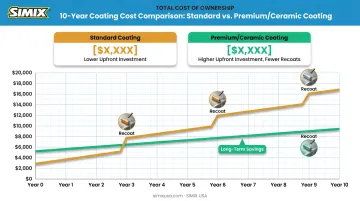
Finally, calculate total cost of ownership. A coating that costs more upfront but stretches recoating intervals from three years to ten usually wins on a ten-year budget, even if it loses on day-one price.
Application Best Practices
Choosing the right coating only pays off with correct application. Surface preparation is the single biggest factor in coating longevity, regardless of chemistry. Skipping degreasing or profiling is the most common reason coatings fail early.
- Clean and degrease the surface to remove oil, grease, and contaminants
- Profile or lightly abrade the substrate so the coating has something to grip
- Confirm dry conditions within the manufacturer's temperature and humidity window
- Apply per spec, matching the required number of coats and film thickness
- Schedule follow-up inspections to catch early wear before it becomes a failure
Manufacturer cure schedules exist for a reason. Rushing a coated surface back into service before it fully cures is one of the fastest ways to void a warranty and shorten service life.
Next-Generation Ceramic Coatings: Where Building Protection Is Headed
Traditional coating work treats cleaning and protection as two separate jobs, degreasing now and coating later, sometimes with different contractors on different schedules. SIMIX's approach folds both steps into one process: a peroxide-based cleaner and degreaser immediately followed by a ceramic clearcoat, so the surface is protected while it's at its cleanest.
That sequencing matters because contamination is the enemy of adhesion. A metal-safe cleaning step removes oil, oxidation, and biofilm without pitting aluminum or copper coils. Then the ceramic layer bonds to a surface that's actually ready for it.
On HVAC coils specifically, the clearcoat is engineered to be thermally conductive rather than insulating, since a coating that traps heat defeats its own purpose. Instead, it smooths the coil surface at a microscopic level, improves condensate shedding, and resists the fouling that normally forces compressors to work harder over time.
The documented results at American Leadership Academy show it: a 21.52% HVAC energy cut and $17,005 in savings, with no equipment replaced.
The chemistry itself relies on NSF-certified, water-based, zero-VOC formulations, which matters for hospitals, schools, and commercial kitchens that can't use solvent-heavy products near occupants or food prep.
The Same Logic, Applied Beyond HVAC
That systems-level approach is now expanding well past HVAC:
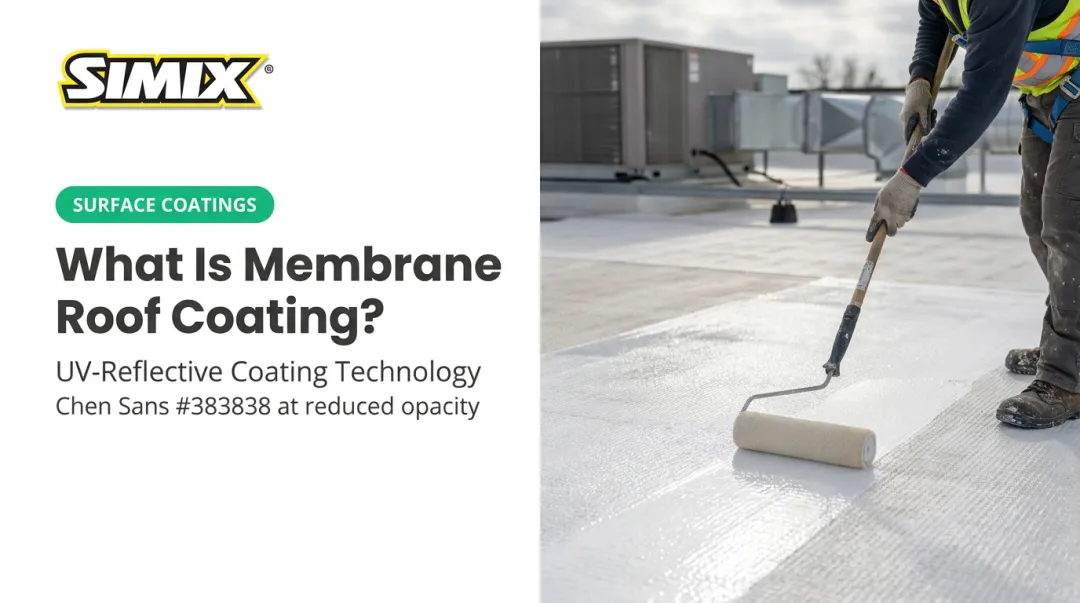
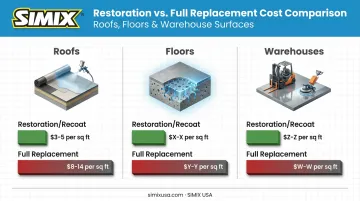
- Roofs: existing membranes get pressure-washed and coated rather than torn off, roughly $3-5 per square foot versus $8-14 per square foot for full replacement
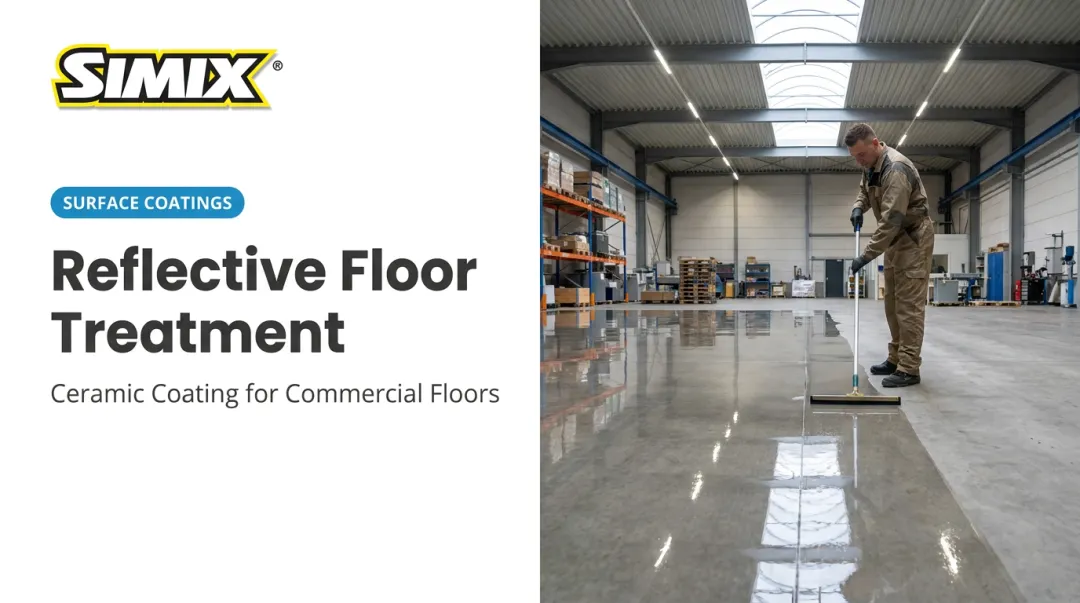
- Floors: ceramic coatings bond into concrete's micropores instead of sitting on top like wax, eliminating stripping cycles
- Warehouses: diamond polishing paired with ceramic chemistry restores worn concrete floors without a full slab replacement
The broader trend is a move away from single-purpose paint and toward multi-surface systems chosen for what they measurably do.
Frequently Asked Questions
What are the types of building coatings?
Building coatings generally fall into six categories: protective/anti-corrosion, waterproofing, fireproof/intumescent, thermal/energy-efficient, floor, and specialty/ceramic. Each is chosen based on the substrate and the stress it needs to withstand.
What is coating in construction?
A coating is a functional layer applied to a building substrate to protect, insulate, or improve performance, not just enhance appearance. That's what separates it from decorative paint, chosen mainly for color and finish.
How long do building coatings typically last?
Lifespan depends on coating type and exposure. Basic paints may need reapplication within a few years. In contrast, architectural fluoropolymer coatings are documented to last upward of 30 years, with advanced ceramic systems falling in a similar long-term range.
Are building coatings environmentally friendly?
Newer water-based, zero-VOC, and NSF-certified coatings are formulated to minimize environmental and health impact compared to older solvent-based products. Look for third-party certifications rather than taking "eco-friendly" claims at face value.
How much do building coatings cost for commercial facilities?
Cost varies widely by substrate, square footage, and coating type, so there's no single reliable rate across categories. Total cost of ownership, including maintenance savings and recoating frequency, matters more than the upfront quote.
Can building coatings be applied over existing surfaces without full replacement?
Yes. Most modern coating systems, including ceramic clearcoats, are designed to go directly over existing HVAC coils, floors, and roofing after proper cleaning and surface prep. This avoids the cost and disruption of full tear-outs.