Cleaning stucco isn't as simple as blasting it with a pressure washer, either. The material can crack, pit, or discolor permanently if you use too much force or the wrong chemicals. A mistake here doesn't just look bad, it can force water behind the finish and cause damage you won't see until months later.
This guide walks through the exact steps for cleaning stucco safely, the tools and solutions that work best, whether pressure washing is ever a good idea, and the mistakes that ruin otherwise sound walls.
Key Takeaways
- Check stucco for cracks or chips first, then seal them with color-matched caulk
- Skip harsh acids and choose TSP, Borax, or an NSF-certified peroxide cleaner instead
- Hand-washing with a sprayer and soft brush beats pressure washing for most homes
- Let cleaner dwell 10-20 minutes before rinsing, and always test a hidden patch first
- Annual cleaning plus a protective coating keeps stains from coming back as fast
How to Clean Stucco: Step-by-Step Guide
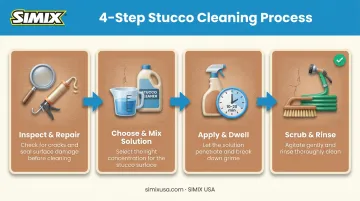
Step 1: Inspect and Repair the Surface First
Walk the entire wall before you wet anything. Look for hairline cracks, chips, and eroded spots. Water that finds its way into damaged stucco doesn't just sit there. It seeps behind the finish and feeds mold or structural decay you won't spot until it's expensive.
Seal minor flaws with a color-matched exterior acrylic caulk. Most acrylic-latex caulks need about 24 hours to fully cure and become water-ready, though cooler temperatures or high humidity can stretch that out. Larger cracks, crumbling patches, or anything that looks structural should go to a professional, not a caulk gun.
While you're inspecting, identify what you're actually dealing with:
- Dirt and dust — usually lifts with a mild soap solution
- Black mildew — needs a bleach or peroxide additive to actually kill it, not just hide it
- Green algae — same story, plain soap won't finish the job
Knowing the stain type upfront saves you from a wasted first pass.
Step 2: Choose and Mix the Right Cleaning Solution
Two DIY mixes show up repeatedly in stucco-cleaning guides:
- TSP and water — Bob Vila recommends 15 parts water to 1 part TSP for stucco specifically, though general-purpose TSP cleaning uses a stronger 1/2 cup per 2 gallons. Test a hidden painted spot first since TSP is caustic.
- Borax and dish soap — a popular combination for general grime, though there's no single verified ratio, so start weak and adjust.
For a gentler option that skips the fumes and bleach-related discoloration risk, an NSF-certified, peroxide-based cleaner such as SIMIX Multi-Surface Peroxide Cleaner & Degreaser works as an alternative. It's zero-VOC and formulated for exterior surfaces, which matters if you've got flower beds or grass butting up against the foundation.
Wear rubber gloves and eye protection whatever you mix. This goes double for bleach-based formulas, and never combine bleach with ammonia-based products.
Step 3: Apply the Solution and Let It Dwell
Pre-wet the wall with a hose or a low-pressure setting before applying anything. This keeps the porous surface from sucking the cleaner in too fast and drying out mid-treatment.
Work in sections you can realistically finish before the solution dries:
- Apply from bottom to top with a pump sprayer or brush
- Concentrate extra product on visibly stained patches
- Let it dwell 10-20 minutes (up to 30 for stubborn algae or mold)
- Lightly mist the wall if it starts drying out before you're done
Applying bottom-up sounds backward, but it prevents streaking that happens when cleaner runs down over dry, unsoaked stucco below.
Step 4: Scrub, Rinse, and Spot-Check
For stubborn spots, use a soft to medium-bristle brush only. Wire brushes and stiff scrubbing pads chew into the textured finish and leave marks that don't come out.
Rinse top to bottom with a hose or low-pressure nozzle so loosened dirt washes downward instead of re-depositing on the sections you just cleaned. Let the wall dry for about 24 hours, then do a final walk-around. Any spots that still look dingy get a second, smaller treatment rather than a full re-do of the whole wall.
Should You Pressure Wash Stucco?
Short answer: yes, but carefully. Pressure washing stucco is possible, but it's also the fastest way to crack, pit, or force water behind the finish if you overdo it. Low-pressure or manual cleaning is the safer default for most homeowners.
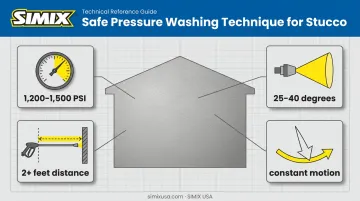
Recommended PSI range: Lowe's specifies 1,200-1,500 PSI for cement stucco, which is notably lower than what you'd use on concrete or brick.
If you do pressure wash, technique matters as much as PSI:
- Use a wide-angle nozzle tip (25-40 degrees) — narrower tips concentrate too much force in one spot
- Angle the spray downward so water sheds off the wall instead of driving upward under the finish
- Start at least 2 feet away and only move closer in small increments if there's no visible damage
- Keep the nozzle moving constantly; holding it in one spot for even a few seconds can pit the surface
When to skip pressure washing:
- Painted stucco (aggressive spray can strip or streak the paint)
- Synthetic EIFS stucco systems
- Walls with existing cracks or patches
- Older, weathered surfaces where the finish is already thin
EIFS is a different animal altogether. Sto's manufacturer guide caps EIFS washing at 500 PSI and prohibits high-pressure, steam, or solvent cleaning outright. Applying cement-stucco pressure settings to EIFS is a guaranteed way to damage it.
For most homes, a garden sprayer, soft brush, and hose rinse get the job done with far less risk. Save the pressure washer for heavily soiled, structurally sound cement stucco only.
What You Need Before Cleaning Stucco
Tools & Equipment
- Garden hose with adjustable nozzle
- Pump or backpack sprayer for applying cleaner evenly
- Soft-bristle brush (never wire)
- Bucket for mixing solutions
- Pressure washer with a low-pressure, wide-angle nozzle (optional, for sound stucco only)
Cleaning Solutions & Materials
| Cleaner Type | Best For | Watch Out For |
|---|---|---|
| Bleach-based | Algae, mildew | Can discolor certain finishes; fumes |
| Borax + dish soap | General dirt | No verified universal ratio |
| TSP | Dirt, grime | Caustic; test first |
| NSF-certified peroxide (such as SIMIX) | General dirt, mildew, algae | Minimal fumes, no bleach runoff toxicity |
Peroxide-based formulas clean effectively without the harsh smell or landscaping risk that comes with bleach runoff, which matters if your beds sit right against the wall.
Safety Precautions
- Wear rubber gloves and eye protection when mixing any solution
- Work in a ventilated area, even outdoors, especially with bleach
- Pre-rinse nearby plants and cover sensitive landscaping before spraying
- Check local regulations before letting runoff drain into storm systems — some municipalities restrict this
Common Mistakes & Troubleshooting
Most stucco damage comes down to a handful of avoidable errors:
- Skipping the crack inspection lets water seep behind the finish, causing hidden mold or decay that surfaces months later
- Using too much pressure or holding the nozzle too close pits and permanently erodes the textured surface
- Reaching for solvent cleaners, steam machines, or wire brushes can damage or discolor the finish
- Letting cleaner dry on the wall before rinsing redeposits residue and makes the next cleaning pass harder, not easier
Beyond these prevention steps, one troubleshooting scenario comes up often: stains reappearing within a few weeks of cleaning. The usual culprit is a skipped mildewcide step. Plain soap and water lifts dirt but doesn't kill mold spores. Retreat with a peroxide-based cleaner (SIMIX's Multi-Surface Peroxide Cleaner & Degreaser works well here) and give it a full 15-20 minute dwell time before rinsing.
Preventing Future Stains: Long-Term Stucco Care
Clean stucco doesn't stay clean on its own, especially in humid or shaded climates. Protect it with a few simple habits:
- Clean at least once a year to keep dirt, algae, and air pollution from working into the porous surface before it stains permanently
- Trim vegetation back from walls and redirect sprinklers or downspouts away from stucco — moisture is what feeds algae and mildew in the first place
- Apply a breathable protective coating after cleaning to extend the time between deep cleans
SIMIX's ceramic clearcoat technology delivers this kind of protection, engineered to resist staining on exterior surfaces while still letting the substrate breathe. Pairing an annual clean with a protective layer means less scrubbing and fewer stains creeping back between treatments.
Frequently Asked Questions
Should you pressure wash stucco?
It's possible but riskier than hand-cleaning. If you use a pressure washer, keep PSI in the 1,200-1,500 range and use a wide-angle nozzle from at least 2 feet away. Prefer manual application for painted or older walls.
Can you use bleach to clean stucco?
Diluted bleach works well against algae and mildew, but it can discolor certain painted finishes. NSF-certified peroxide cleaners offer a gentler alternative without that risk.
How often should stucco be cleaned?
At least once a year for most climates. Humid or heavily shaded areas prone to mold and algae growth may need cleaning two to three times a year.
Will cleaning stucco remove paint?
Low-pressure cleaning with mild solutions is generally safe for painted stucco. Excessive pressure or aggressive scrubbing, however, can strip the paint layer.
What's the best homemade stucco cleaner?
A TSP or Borax, dish soap, and warm water mix handles general dirt well. Add bleach only for algae or mildew, and always test a hidden area first.
Can I use a regular garden hose instead of a pressure washer?
Yes, for light to moderate dirt. A hose paired with soft-brush scrubbing is often enough and carries far less risk of surface damage than a pressure washer.