The reason is simple. Dull, worn concrete absorbs light instead of bouncing it back into the space. That means more fixtures, more wattage, and more strain on maintenance crews who are constantly stripping and burnishing to keep up appearances.
This guide breaks down what reflective floor treatments actually are, the science behind Light Reflectance Value (LRV), and the methods available, from diamond polishing to modern ceramic coatings, so you can choose the right fit for your facility.
Key Takeaways
- Reflective treatments raise a floor's Light Reflectance Value, brightening spaces without new fixtures
- Diamond polishing remains the classic method, though densifiers and ceramic coatings now offer faster, cheaper shine
- Brighter floors boost visibility and safety around forklifts, ladders, and equipment
- SIMIX ceramic coatings eliminate stripping and burnishing, cutting annual floor maintenance time by 20-40%
What Is a Reflective Floor Treatment? Understanding Light Reflectance Value (LRV)
A reflective floor treatment is any process, mechanical polishing, chemical densification, or coating application, that increases how much light a floor bounces back into a room instead of soaking it up. The goal is measurable light performance, not simply gloss.
Understanding the LRV Scale
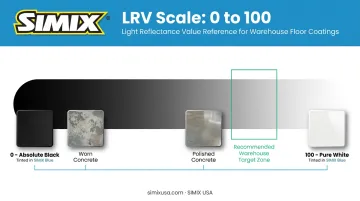
LRV measures the visible, usable light a surface reflects, on a scale running from 0 (absolute black, total absorption) to 100 (pure white, near-total reflection). A dark, worn concrete floor might sit in the single digits. A polished, light-toned slab can climb well past 50.
There's no single universal LRV target for every warehouse or industrial space. Many lighting designers and facility teams aim for floor LRVs in the 60-70% range as a practical middle ground.
This range stays bright enough to reduce reliance on overhead fixtures, without creating glare that makes screens or signage hard to read. Your lighting consultant should confirm the right number for your specific layout, fixture type, and ceiling height.
The Four Levels of Concrete Floor Reflectivity
The Concrete Polishing Council (CPC) grades finished concrete using distinctness-of-image (DOI), gloss, and haze measurements rather than grit alone. Here's how the four levels break down, based on the CPC's 2024 appearance chart:
| CPC Level | Appearance | Average DOI |
|---|---|---|
| 1 - Flat/Ground | Matte, no reflection | 0-9% |
| 2 - Satin/Honed | Soft satin sheen | 10-39% |
| 3 - Semi-Polished | Identifiable but soft image | 40-69% |
| 4 - Highly Polished | Sharp, mirror-like image | 70-100% |
Level 4 is the finish most people picture when they hear "polished concrete," a nearly mirror-clear surface. But the grit sequence used to get there varies by slab hardness, aggregate exposure, and contractor technique. Two floors polished to the same grit can land at different CPC levels depending on how the crew executed the job.
Why Floor Reflectivity Matters: Key Benefits for Facilities
A brighter floor changes more than the way a room looks. It touches lighting load, safety, and long-term operating costs.
Energy considerations. Light-colored, high-LRV floors increase inter-reflected light in a space, meaning light bounces around the room more efficiently instead of getting absorbed on first contact. Whether that translates into fewer fixtures or lower wattage depends on your specific lighting design, so it's worth running the numbers with a lighting model rather than assuming a blanket percentage.
Safety. A reflective floor helps ambient light go further, improving visibility around racking, ladders, and pallet jacks.
OSHA requires a minimum of 5 foot-candles in many indoor construction and warehouse areas, and calls for forklift headlights where general lighting drops below 2 lumens per square foot, according to OSHA's illumination standard. It's one input among several, not a substitute for proper aisle marking and fixture maintenance.
Productivity and morale. Research on daylight exposure links brighter environments to better alertness and visual comfort among office workers. That evidence doesn't prove a reflective floor alone drives output, but brighter, more comfortable spaces tend to support better working conditions.
Sustainability. Interior concrete can support LEED's Low-Emitting Materials criteria when left inherently nonemitting, though claims about automatic Heat Island credits apply mainly to exterior pavement, not indoor floors. Check your specific rating system before building reflectivity into a LEED strategy.
Durability and cost. This is where reflectivity and maintenance savings compound. Traditional finishes need frequent stripping and recoating, burning through labor hours and chemicals. SIMIX's ceramic-coated floor systems are built to eliminate that cycle entirely, and internal data shows they can reduce annual floor maintenance time by 20-40%, since crews skip the stripping step altogether.
How Reflective Floor Finishes Are Achieved: From Diamond Polishing to Ceramic Coatings
There isn't one road to a reflective floor. The right method depends on your slab condition, budget, and how fast you need the job done.
Traditional Diamond Polishing Process
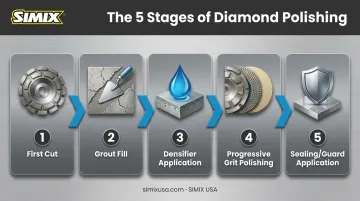
Standard diamond polishing follows five stages:
- First cut - initial grinding to expose the desired aggregate level
- Grout fill - sealing pinholes, air voids, and microcracks before finer grinding
- Densifier application - a reactive silicate that hardens the surface and reduces porosity
- Progressive grit polishing - stepping through diamond grits, typically not skipping more than double the previous grit
- Sealing/guard application - a protective topcoat to lock in the finish
The final CPC level (1 through 4) depends heavily on the terminal grit used and how consistently the crew maintained the scratch pattern throughout.
Affordable Alternatives: Grind-and-Densify Systems
Not every floor needs the full polishing sequence. Two lower-cost paths exist:
- Grind but don't polish - apply a two-stage colloidal silica densifier and silica-polymer stain protector, then burnish for near-polished gloss without the full diamond progression.
- Don't even grind - for power-trowelled slabs, sanding screens plus densifier and burnishing can build gloss on an existing floor with no grinding step at all.
Both routes trade some of the sharpness of a true Level 4 polish for far less labor and downtime.
Ceramic Coating Systems: A Modern, Low-Maintenance Alternative
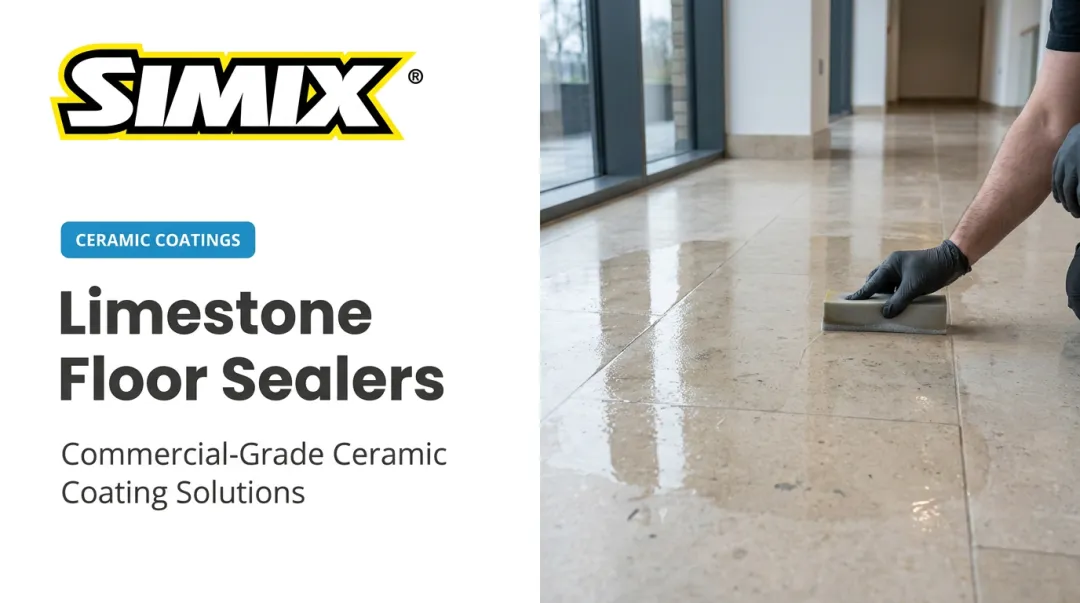
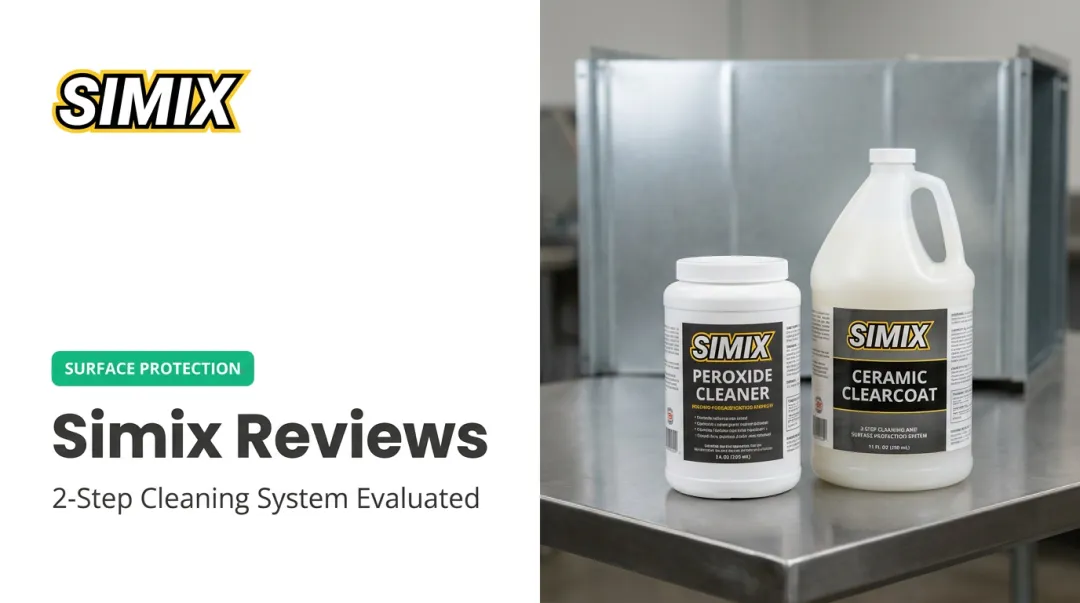
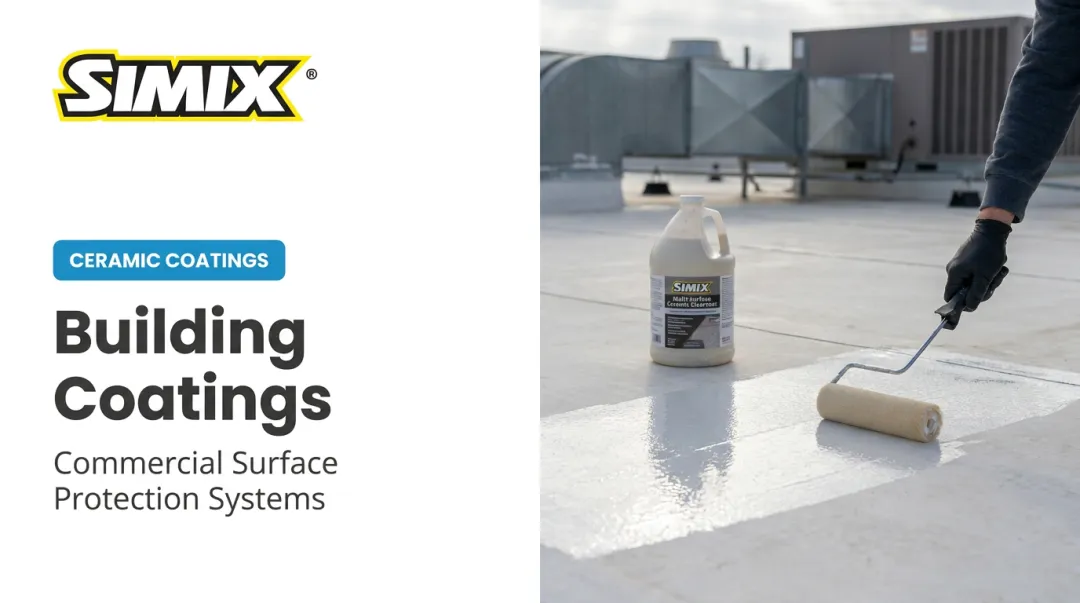
SIMIX's 2-Step Cleaner & Ceramic Clearcoat System takes a different approach. Instead of grinding for reflectivity, it builds a durable ceramic layer over the existing surface. The process starts with the SIMIX Multi-Surface Peroxide Cleaner & Degreaser, followed by multiple thin coats of ceramic clearcoat that bond into the concrete's micropores rather than sitting on top like wax.
Three specifics stand out:
- The cleaner component is NSF-certified, water-based, and zero-VOC, which matters for food service, healthcare, and other environments where harsh strippers aren't welcome
- Application runs 8-12 coats minimum for standard concrete floors, applied in thin layers over one to two days
- SIMIX also offers a Concrete Rejuvenation System pairing diamond polishing with ceramic chemistry, ideal for older slabs needing more than a coating alone can fix
You can find more on the floor-specific product line at SIMIX's floors and hard surfaces page.
Reflective Floor Treatment vs. Traditional Diamond Polishing: Cost, Time, and Durability
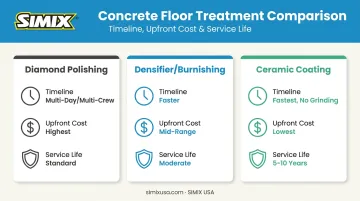
Timelines. Full diamond polishing is a multi-day, multi-crew job. Densifier and coating alternatives move faster.
A PROSOCO case study at a 15,000-square-foot Ace Hardware in Parkville, Missouri, found that combining wet-grinding and densifying in one pass saved 4-5 hours — roughly 40% of the project timeline. That example covers power-trowel grinding on an existing slab rather than a direct coating-versus-polish comparison, but it shows how much time a streamlined process can save.
Upfront cost. Full diamond polishing typically carries the highest upfront investment due to labor-intensive grinding stages. Densifier and burnishing systems land in the middle. Ceramic coatings often cost less initially since they skip mechanical grinding entirely, though pricing depends heavily on floor size and existing condition.
Service life. Silica-polymer dispersions and ceramic coatings can outlast conventional stain protectors before reapplication is needed. SIMIX's floor coatings are rated for 5-10 years of service, compared to the more frequent recoating cycles typical of wax-based topical guards.
Maintaining a Reflective Floor's Shine and Extending Its Life
Keeping a reflective floor bright doesn't require much, but it does require consistency.
- Autoscrub daily or weekly with pH-neutral, non-abrasive cleaners to prevent dulling and buildup
- Re-burnish periodically to restore shine between full recoating cycles, rather than stripping and starting over
- Avoid harsh acidic or degreasing chemicals, which can strip densifiers and ceramic layers prematurely
Eco-friendly, non-toxic cleaner systems help on two fronts: they preserve the reflective finish, and they keep indoor air quality cleaner than harsh stripping chemicals allow.
For SIMIX-coated floors specifically, routine cleaning with a compatible cleaner refreshes the surface and keeps its photocatalytic properties active. Confirm exact re-burnishing intervals with SIMIX based on your facility's traffic levels.
Choosing the Right Reflective Floor Solution for Your Facility
The right treatment depends on three things: your floor's current condition, how much traffic it sees, and your budget.
Traffic and condition:
- Heavy forklift traffic favors diamond polishing or densified systems built for abrasion resistance
- Lighter foot traffic areas may do well with a ceramic coating that skips grinding altogether
- Already-damaged slabs may need resurfacing or the Concrete Rejuvenation approach before any reflective finish goes on
Industry-specific needs:
- Healthcare facilities need low-VOC systems that won't compromise indoor air quality
- Food service environments need degreasing resistance to handle grease and cleaning chemical exposure
- Warehouses prioritize durability and LRV performance over cosmetic polish
- Data centers need anti-static, low-dust flooring that won't interfere with sensitive equipment
Once you know which technical approach fits, the next step is justifying the spend to decision-makers. Build the case around two data points:
- Combine your floor's current condition assessment with a lighting consultant's projected LRV gains
- Request documented maintenance time savings from your provider, since procurement teams often weigh that metric more heavily than gloss level alone
Frequently Asked Questions
Is polished concrete reflective?
Yes. Reflectivity depends on the polish level and grit achieved, ranging from a low-sheen satin finish at CPC Level 2 to a mirror-like Level 4 gloss.
Is polishing concrete floors worth it?
For high-traffic commercial spaces, yes. Durability, energy considerations, and lower long-term maintenance costs typically outweigh the upfront grinding investment over the floor's lifespan.
Can concrete floors be resurfaced?
Yes. Damaged or worn concrete can be resurfaced with overlays, densifiers, or coating systems instead of full replacement, restoring both appearance and reflectivity at a fraction of replacement cost.
What LRV is best for a warehouse floor?
A common target is the 60-70% range, which balances brightness against glare control. Your specific target should factor in fixture type, ceiling height, and task requirements.
How long does a reflective floor coating last before needing reapplication?
It varies by system. Silica-polymer and ceramic coatings, like SIMIX's, outlast conventional stain protectors, with SIMIX rating its floor coatings for 5-10 years of service.
Is a reflective floor slippery or unsafe?
Gloss level and slip resistance aren't the same thing. Slip-resistant additives or textured coatings can be built into reflective finishes, and removing grease or residue buildup often improves traction more than gloss level affects it.