Spraying peroxide on a roof sounds straightforward. In practice, results swing wildly depending on concentration, dwell time, application method, roof material, and how established the growth already is.
This guide walks through whether hydrogen peroxide is the right call, what you need before starting, exact application steps, the variables that make or break your results, and the mistakes that waste both time and product.
TL;DR
- Hydrogen peroxide is a biodegradable bleach alternative, breaking down into water and oxygen
- Best suited for light-to-moderate moss, algae, and black streak buildup, not heavy infestations
- Results hinge on concentration, dwell time, and application method, not just "spray and wait"
- Always finish with a low-pressure soft wash rinse. Never a pressure washer
- Landscape protection, PPE, and weather timing matter as much as the chemical itself
How to Clean a Roof Using Hydrogen Peroxide (Step-by-Step)
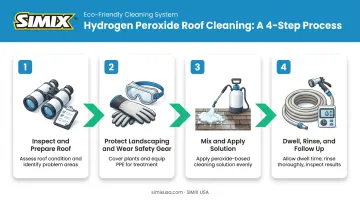
Step 1: Inspect and Prepare the Roof
Walk the property or use binoculars to map out where moss, algae, and lichen have taken hold. Confirm your roof material too. Asphalt shingle, metal, and tile all respond differently to oxidizing cleaners.
Before applying anything:
- Clear loose debris (leaves, branches, twigs) with a soft broom or blower
- Check the forecast; skip application if rain is expected within 24–48 hours
- Avoid peak heat or direct midday sun, which speeds evaporation before the solution can work
Step 2: Protect Landscaping and Set Up Safety Gear
Runoff is the part most DIYers forget. Pre-wet shrubs, gutters, and downspouts so any overspray gets diluted rather than concentrated on contact. For larger commercial or institutional roofs, bag or cover downspouts entirely to capture runoff before it reaches drains or landscaping.
Even household-strength (3%) hydrogen peroxide can irritate eyes, skin, and lungs. Wear:
- Chemical-resistant gloves
- Sealed eye protection or goggles
- A respirator mask, particularly if working near enclosed eaves or in direct sun
Step 3: Mix and Apply the Hydrogen Peroxide Solution
Store-bought 3% peroxide is what most people have under the sink, but it's also the mildest and slowest-acting option. Commercial and NSF-certified peroxide-based cleaners are formulated at a higher, roof-specific strength, which removes a lot of the guesswork around dilution and consistency.
A few application notes:
- Add a small amount of mild surfactant so the solution clings to sloped surfaces instead of sheeting off
- Apply evenly with a low-pressure pump or backpack sprayer, working from the ridge down to avoid streaking
- Saturate the surface fully rather than misting it
SIMIX's Multi-Surface Peroxide Cleaner & Degreaser, for example, is an NSF-certified, ultra-concentrated formula built for exactly this kind of large-surface application. It's mixed and loaded straight into a pump-up or backpack sprayer, with no dilution math required.
Coverage typically runs 4,000–6,000 square feet per mixed gallon on asphalt shingles or barrel tile, and up to 7,500–15,000 square feet per gallon on metal or membrane roofing.
Step 4: Dwell, Rinse, and Follow Up
Let the solution sit per the product label, commonly in the 15–30 minute range, without letting it dry out completely on the surface.
Then:
- Rinse thoroughly with a garden hose or low-pressure soft wash rig
- Skip the pressure washer entirely. The Asphalt Roofing Manufacturers Association (ARMA) warns that high-pressure washing can strip protective granules and lead to premature shingle failure
- Reapply to stubborn spots if black streaks or moss haven't visibly lightened
- Sweep away dead moss and algae residue once dry, since decomposing organic matter left in place invites regrowth
When Should You Use Hydrogen Peroxide to Clean Your Roof (And What You Need)
Best Use Cases
Hydrogen peroxide works well for:
- Light-to-moderate moss, algae, or black streak buildup on asphalt shingle, tile, or metal roofs
- Homes or facilities where nearby vegetation, pets, or rainwater cisterns make sodium hypochlorite too risky to use safely
- Facilities that need an NSF-certified, non-toxic formula, such as SIMIX's peroxide-based cleaner, for food-service or eco-sensitive compliance
When It Falls Short
Heavy, entrenched moss often needs mechanical scraping or a stronger commercial formulation. Standard 3% peroxide can break down before it fully penetrates thick growth. A municipal roof-moss guide from the City of Eugene rates oxidizing bleaches like peroxide as "fairly effective," often requiring more than one application, compared with stronger alkaline cleaners.
Steep or high-pitched roofs beyond a safe walking angle aren't a DIY job. That's a professional soft-wash contractor's territory, not a weekend project.
What You'll Need
Equipment:
- Pump or backpack sprayer
- Soft-bristle broom or scraper
- Extension ladder and, for steep roofs, a safety harness
- Low-pressure hose or soft wash rig
Materials:
- Hydrogen peroxide solution or an NSF-certified peroxide-based cleaner engineered for exterior use
- A mild surfactant
- Tarps for landscape protection
Safety/Compliance:
- Confirm local runoff and wastewater discharge rules, especially for commercial buildings
- Check the manufacturer's SDS for compatibility with your specific roofing material before starting
- Wear gloves and eye protection when mixing or applying concentrated solutions
Key Factors That Affect Hydrogen Peroxide Roof Cleaning Results
Results depend on a handful of controllable variables, not just pouring peroxide onto the roof and hoping for the best.
Concentration of Solution
Household 3% peroxide is milder and slower-acting than professionally formulated solutions. Too weak a mix means you'll be back up there for a second or third round. A tested, NSF-certified formulation gives you consistent, roof-safe strength every time instead of relying on trial and error with a drugstore bottle.
Dwell Time and Weather Conditions
Hydrogen peroxide breaks down into oxygen and water on its own, and that breakdown speeds up in direct heat or sunlight. According to the EPA's biopesticide fact sheet on hydrogen peroxide, the compound decomposes rapidly once applied. Short dwell time under-treats organic growth. Sun exposure shortens your working window even further, so early morning or overcast conditions tend to work best.
Roof Material and Age
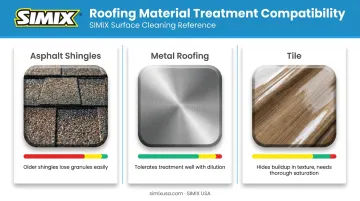
Asphalt shingles, metal, and tile react differently to oxidizing chemicals:
- Older, brittle asphalt shingles lose granules more easily during rinsing
- Metal roofs generally tolerate peroxide treatments well with proper dilution
- Tile can hide organic buildup in surface texture, requiring more thorough saturation
Common Mistakes to Avoid When Cleaning a Roof with Hydrogen Peroxide
Even a gentler chemical like hydrogen peroxide can disappoint if technique slips. Watch for these common missteps:
- Using a pressure washer instead of a low-pressure rinse. The Asphalt Roofing Manufacturers Association (ARMA) is direct on this point: high pressure strips granules and can shorten shingle life.
- Applying peroxide during peak heat or direct sun. Rapid evaporation cuts contact time before the solution can fully oxidize moss and algae.
- Skipping landscape protection. Forgetting to pre-wet plants or bag downspouts leads to overspray damage below the roofline.
- Expecting one application to erase heavy, entrenched moss. Multiple treatments are often necessary compared to stronger alkaline chemicals like sodium hydroxide.
Alternatives to Hydrogen Peroxide for Roof Cleaning
Peroxide isn't always the fastest or cheapest option. Here's how it stacks up:
| Method | Best For | Trade-Off |
|---|---|---|
| Sodium hypochlorite (soft washing) | Heavier moss/algae needing aggressive kill | Harsher on vegetation, pets, and cisterns; needs careful runoff control |
| Sodium percarbonate (oxygen bleach powder) | Easy-to-mix option similar in gentleness to liquid peroxide | Generally less potent; often needs repeat applications |
| Manual/mechanical removal | Isolated, light moss patches or chemical-free preference | Labor-intensive and slow, but zero chemical risk |
SIMIX's NSF-certified peroxide cleaner fits this same gentle profile, offering fast action without the harsh runoff concerns of sodium hypochlorite.
Frequently Asked Questions
Hydrogen peroxide is a safe, eco-friendly roof cleaning method when concentration, dwell time, and application are properly controlled. Using a tested, NSF-certified formulation, like SIMIX's Multi-Surface Peroxide Cleaner & Degreaser, takes most of the guesswork out of the process.
Can you use hydrogen peroxide to clean a roof?
Yes. It effectively removes moss, algae, and black streaks and breaks down into oxygen and water rather than leaving toxic residue behind.
What should you not clean with hydrogen peroxide?
Never mix it with other chemicals like bleach or ammonia. Test it first on delicate finishes or unusual roofing materials before treating the entire surface.
What percentage of hydrogen peroxide should I use to clean a roof?
Household 3% is milder but slower-acting. Commercial-grade or NSF-certified peroxide cleaners are formulated stronger, specifically for exterior surfaces like roofing.
How long should hydrogen peroxide sit on a roof before rinsing?
Check the product label, but 15–30 minutes is typical dwell time. Don't let it dry out completely before rinsing.
Is hydrogen peroxide safe for asphalt shingles?
Yes, when properly diluted and rinsed with low pressure. It's gentler on granules than pressure washing or strong bleach solutions.
How often should you clean a roof with hydrogen peroxide?
It depends on climate, shade, and moisture exposure, but most roofs benefit from cleaning roughly every 1 to 3 years.